27 Layered Haircut Ideas for Long Hair You Need to Try

Long hair is beautiful, but long hair with no shape can quickly turn heavy, flat, and hard to style. That is exactly where layers come in. A good layered haircut keeps every inch of your length while adding movement, lightness, and shape — the kind of cut that makes your hair swing when you walk and fall beautifully whether you blow it out, curl it, or just let it air-dry. Layers are not about cutting your hair short; they are about giving long hair a structure that flatters your face and works with your texture, not against it.
The secret to great long layers is placement. Layers that start too high can thin out the ends, while layers that start too low barely change anything. Your stylist should consider your face shape, your hair’s thickness, and how you actually style your hair day to day. A round face benefits from longer, face-framing pieces that elongate, while thick hair needs internal layers to remove weight, and fine hair needs fewer, longer layers to protect fullness at the ends. If you love the feathered, face-framing drama of a shorter statement cut, you will also adore our 25 butterfly haircut ideas with curtain bangs — many of the same layering tricks appear here in a longer, softer form.
Scroll through these 27 layered haircut ideas for long hair, save the ones that match your texture and face shape, and take them to your stylist with a clear picture of where you want your shortest layer to sit.
1. Classic Long Layers
The classic long layered haircut is the foundation of everything else on this list. Layers begin around the chin or collarbone and fall gradually through the lengths, so the hair moves in soft, cascading tiers instead of one heavy curtain. It suits almost every face shape and hair type, which is why stylists reach for it again and again. Ask for long, blended layers with no harsh steps, and keep the ends full rather than thinned out. Style it with a round brush for a bouncy blowout, or let it air-dry for a relaxed, natural fall. This is the safest — and still the prettiest — layered cut for long hair.
2. Face-Framing Layers
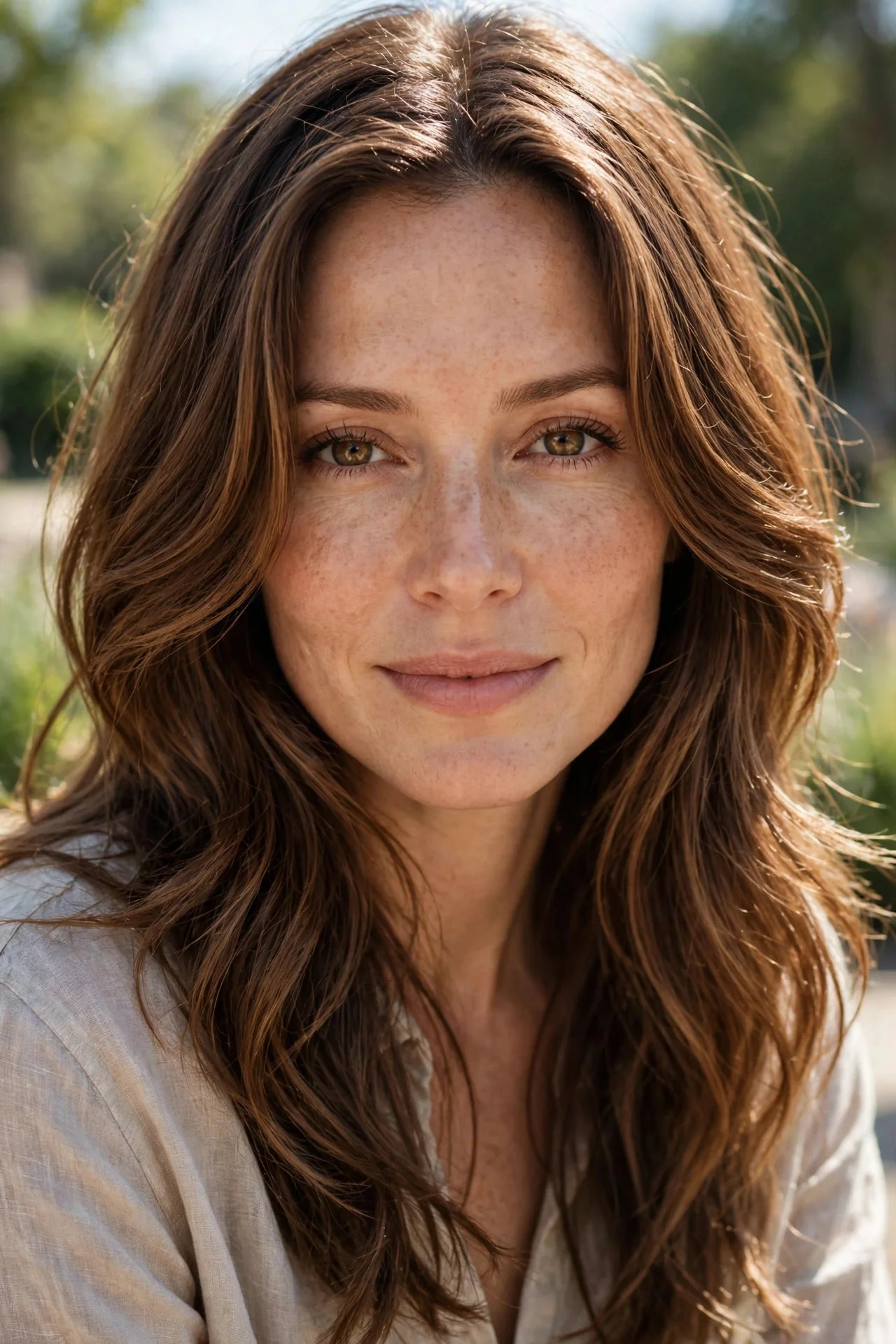
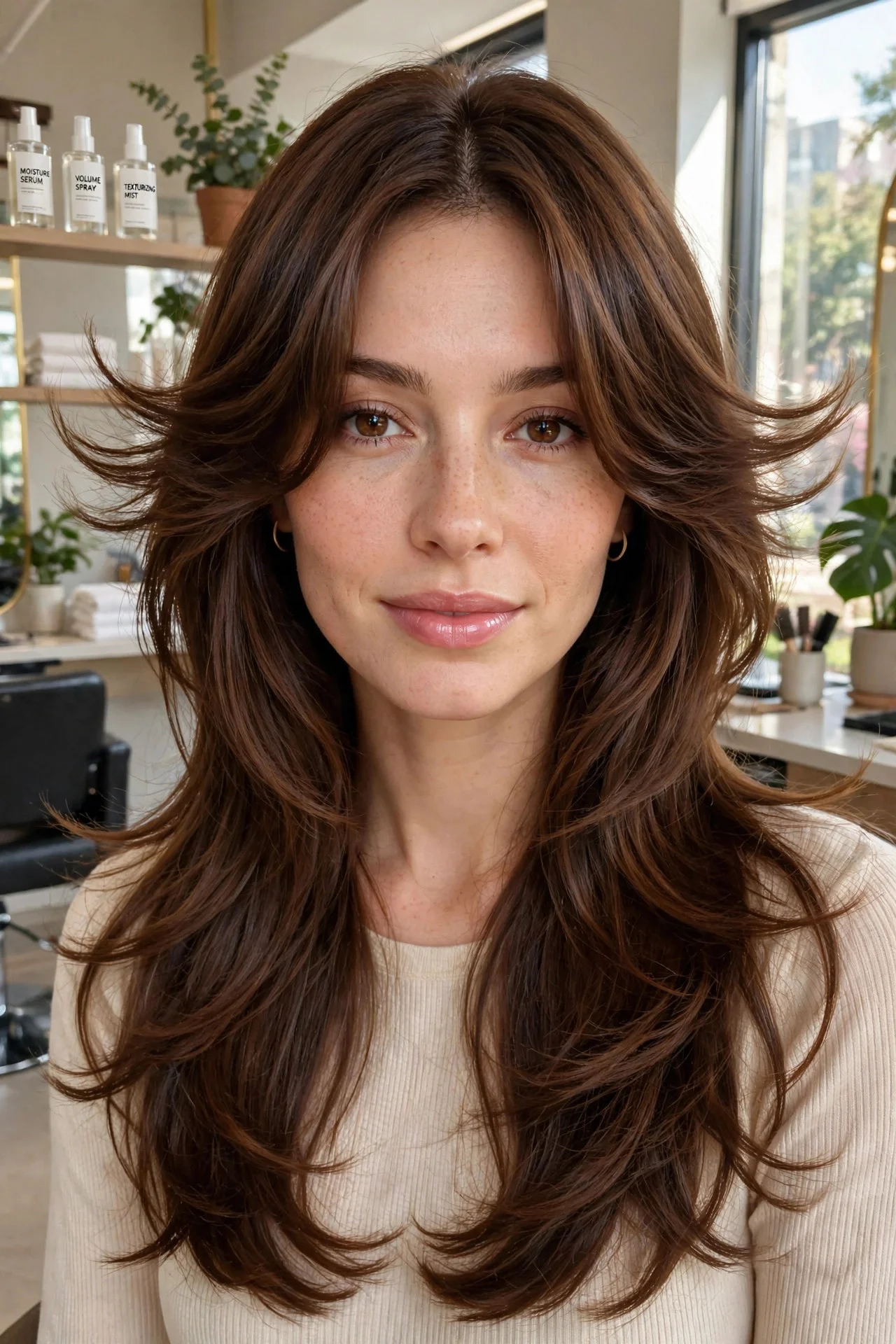
Face-framing layers are the quickest way to make long hair look styled, even when it is not. Shorter pieces around the face — starting at the cheekbone or jaw — open up your features, soften a strong jawline, and draw attention to your eyes and cheekbones. The rest of the hair stays long and full behind them. This cut is especially flattering if you usually wear your hair down and parted in the middle. Ask for the shortest face-framing piece to sit no higher than your cheekbone, and keep the transition into the longer layers smooth so nothing looks disconnected.
3. Curtain Bangs with Long Layers
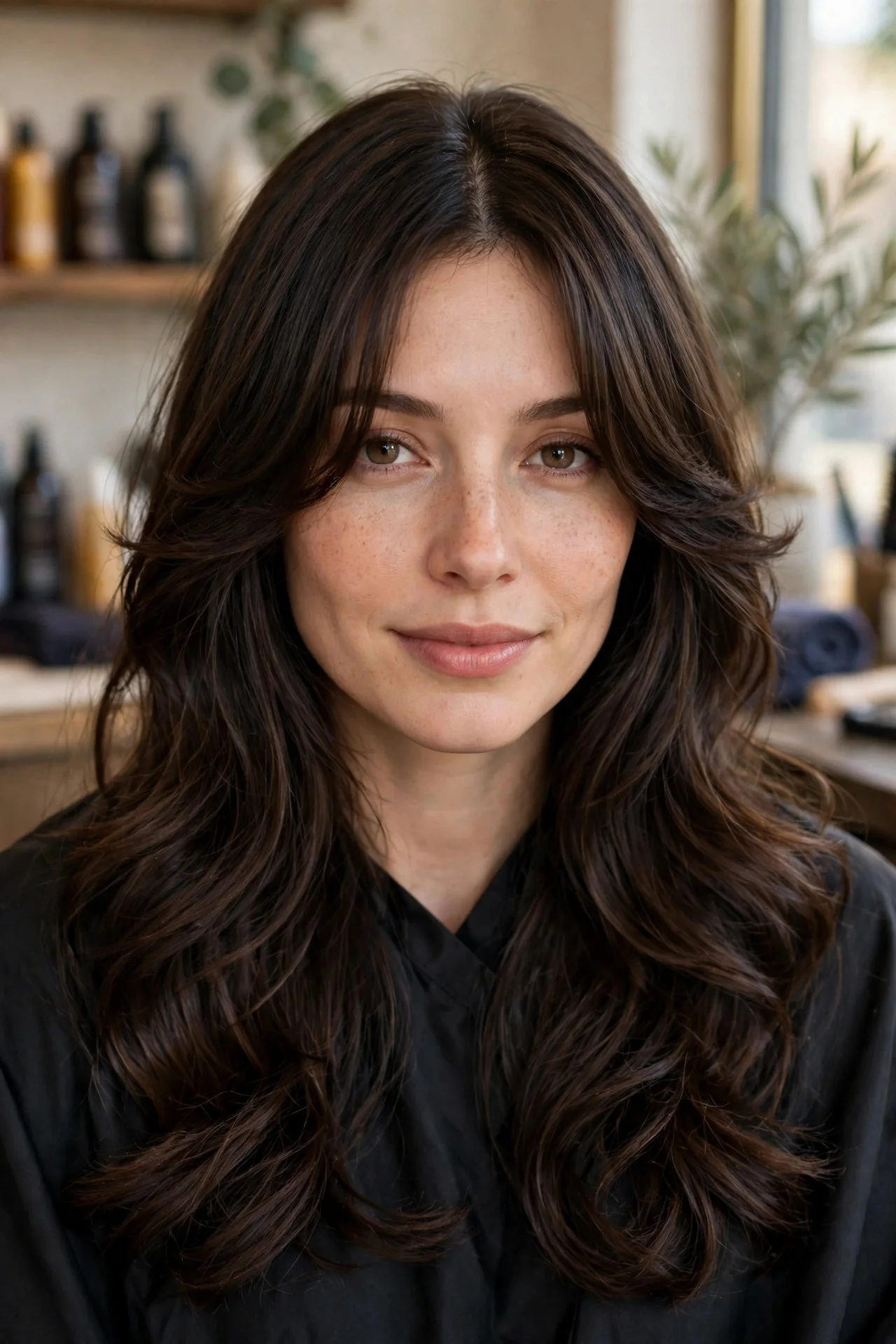
Curtain bangs and long layers are a perfect pair. The bangs part softly in the middle and sweep to each side, framing the face like curtains, while the long layers behind them keep the overall look soft and romantic. It is the grown-out, low-maintenance version of a fringe — no daily styling battle required. Blow-dry the bangs away from the face with a round brush, and let them blend into the face-framing layers. This combination works beautifully on straight, wavy, and lightly curled hair, and it grows out gracefully for months.
4. Feathered Long Layers

Feathered layers are cut and styled so the ends flick softly outward and inward, creating a light, airy finish that never looks heavy. The technique removes weight from the ends while keeping the length, so hair feels bouncier and moves more freely. It is a lovely nod to retro styling, updated for today. Ask your stylist to point-cut the ends for softness rather than cutting them blunt. A quick blowout with a round brush, turning the ends outward in places, brings the feathered effect to life. This is the layered cut to choose when your long hair feels weighed down.
5. V-Cut Layers
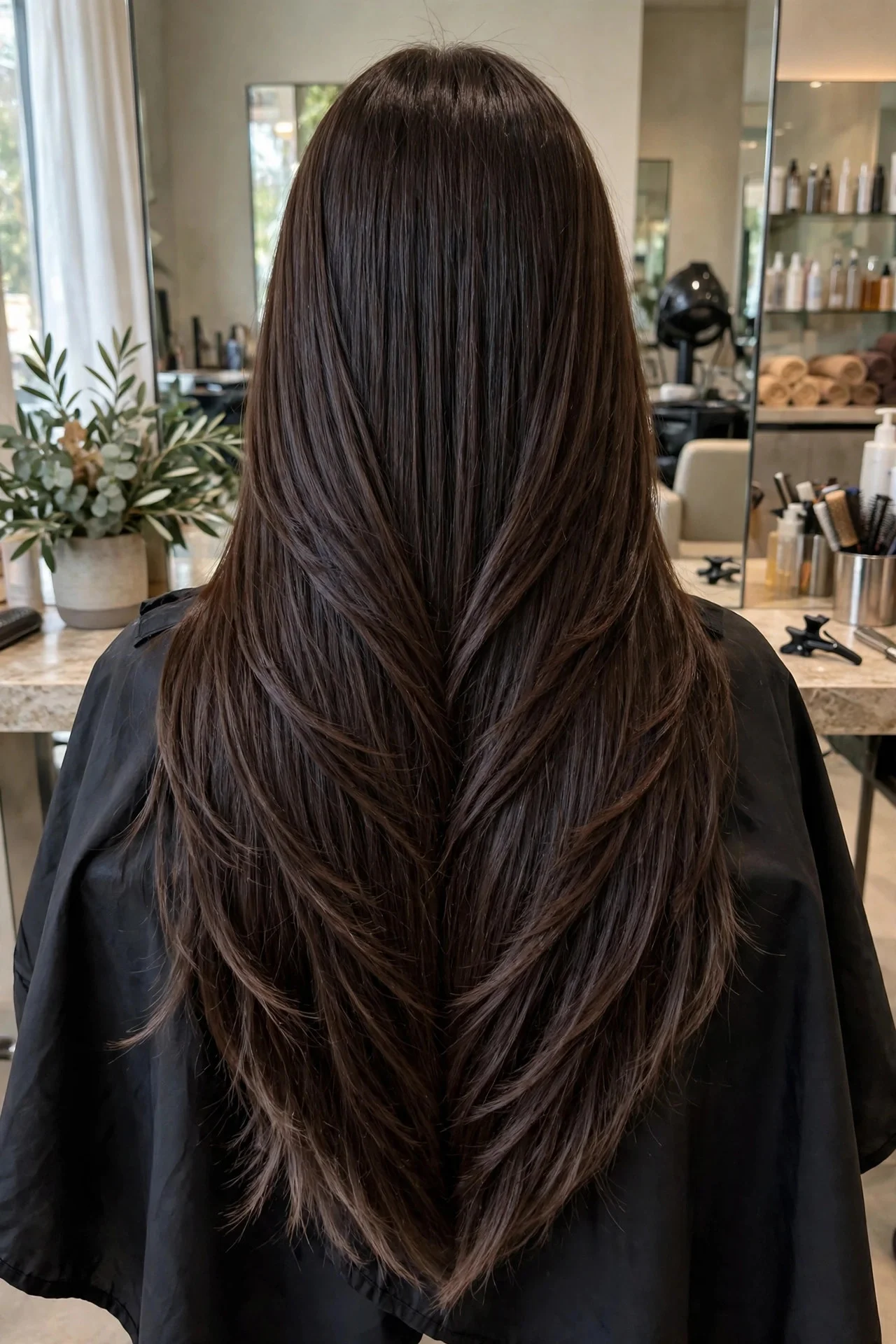
A V-cut shapes the back of the hair into a gentle V, with the longest point in the center and layers rising toward the sides. From behind, it is one of the most flattering silhouettes for long hair, because it shows off the layering and makes the hair look longer and more sculpted at the same time. The V-cut works best when the layers are long and blended, so the V reads as a soft point rather than a sharp angle. It is especially gorgeous on straight or softly waved hair, where the shape is clearly visible, and it looks stunning in photos from behind.
6. U-Cut Layers
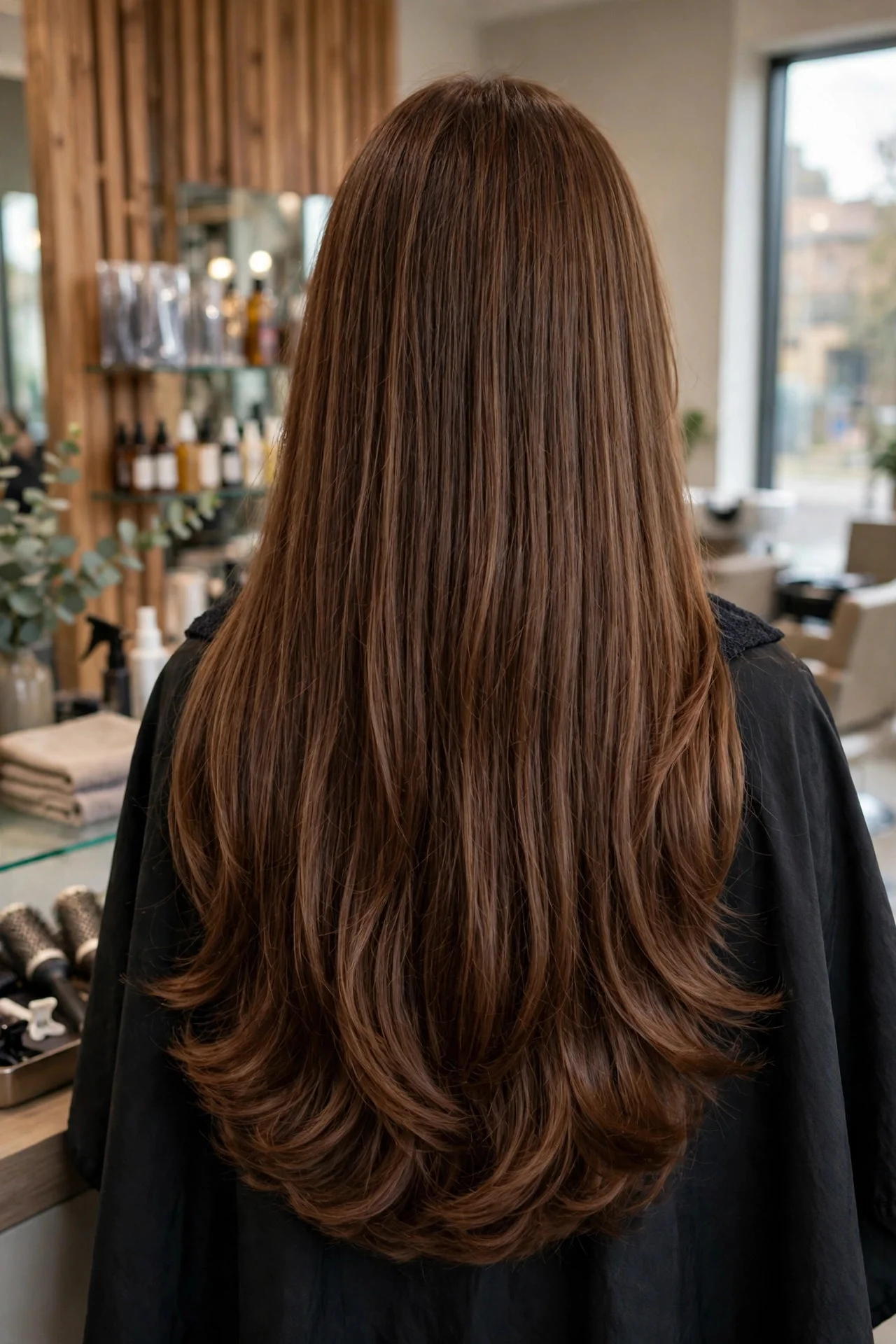
The U-cut is the softer cousin of the V-cut: the back of the hair curves gently into a rounded U, with the shortest pieces at the sides and the longest in the middle. It keeps the ends looking thick and healthy while still giving the hair shape and movement. Choose a U-cut if you want layers but you are nervous about losing fullness at the ends. It is the most forgiving long layered shape, it suits every texture, and it grows out beautifully because the curve simply gets longer and softer over time.
7. Long Layers with Balayage
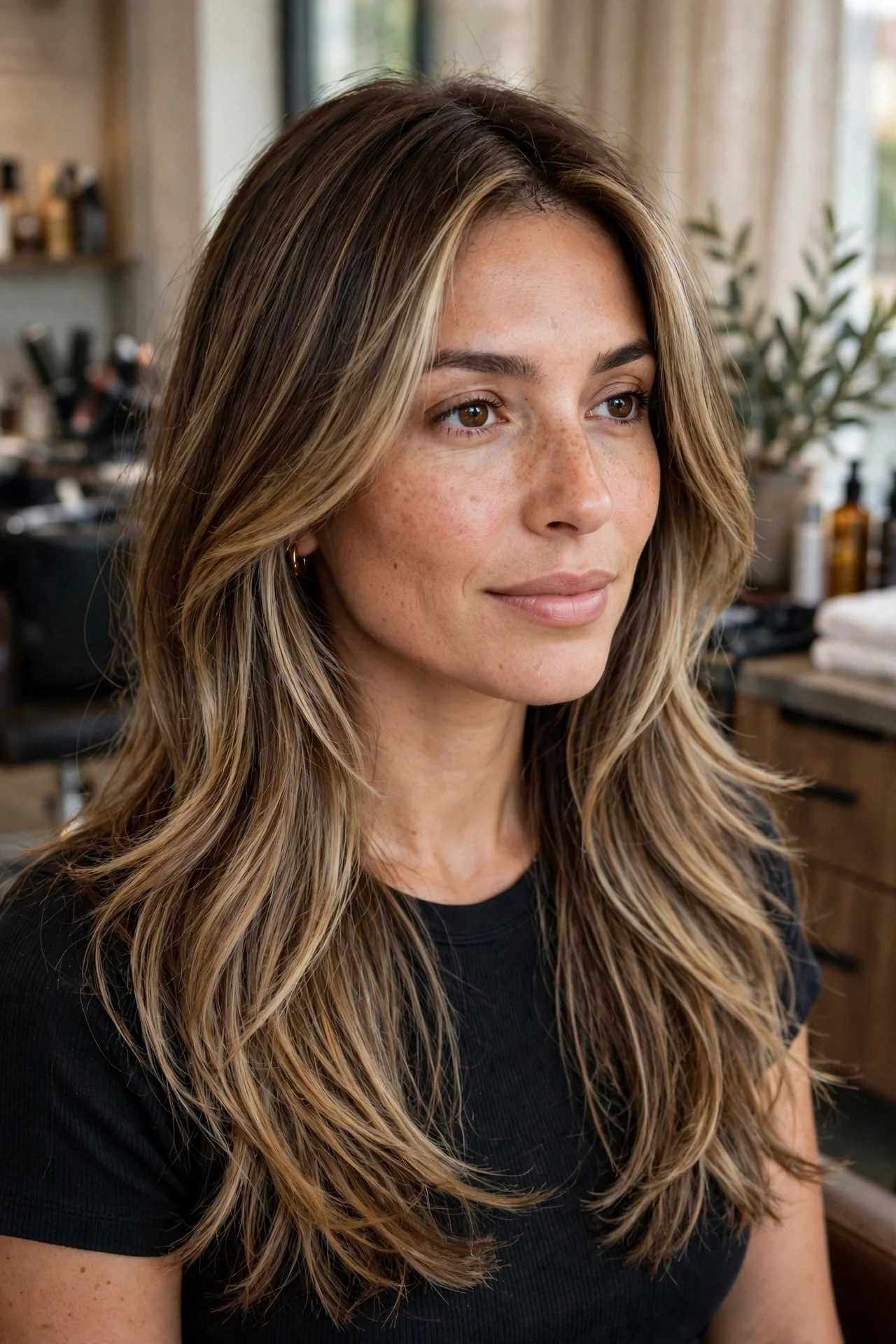
Layers and balayage were made for each other. When color is hand-painted through layered hair, every tier catches a different tone, so the cut looks dimensional and the color looks natural. The layers break up the color so it never sits in one flat block. Ask for balayage that follows your layers — lighter pieces around the face and through the ends, deeper tones underneath for depth. This pairing is the easiest way to make a simple layered cut look expensive and salon-fresh for months.
8. Choppy Textured Layers
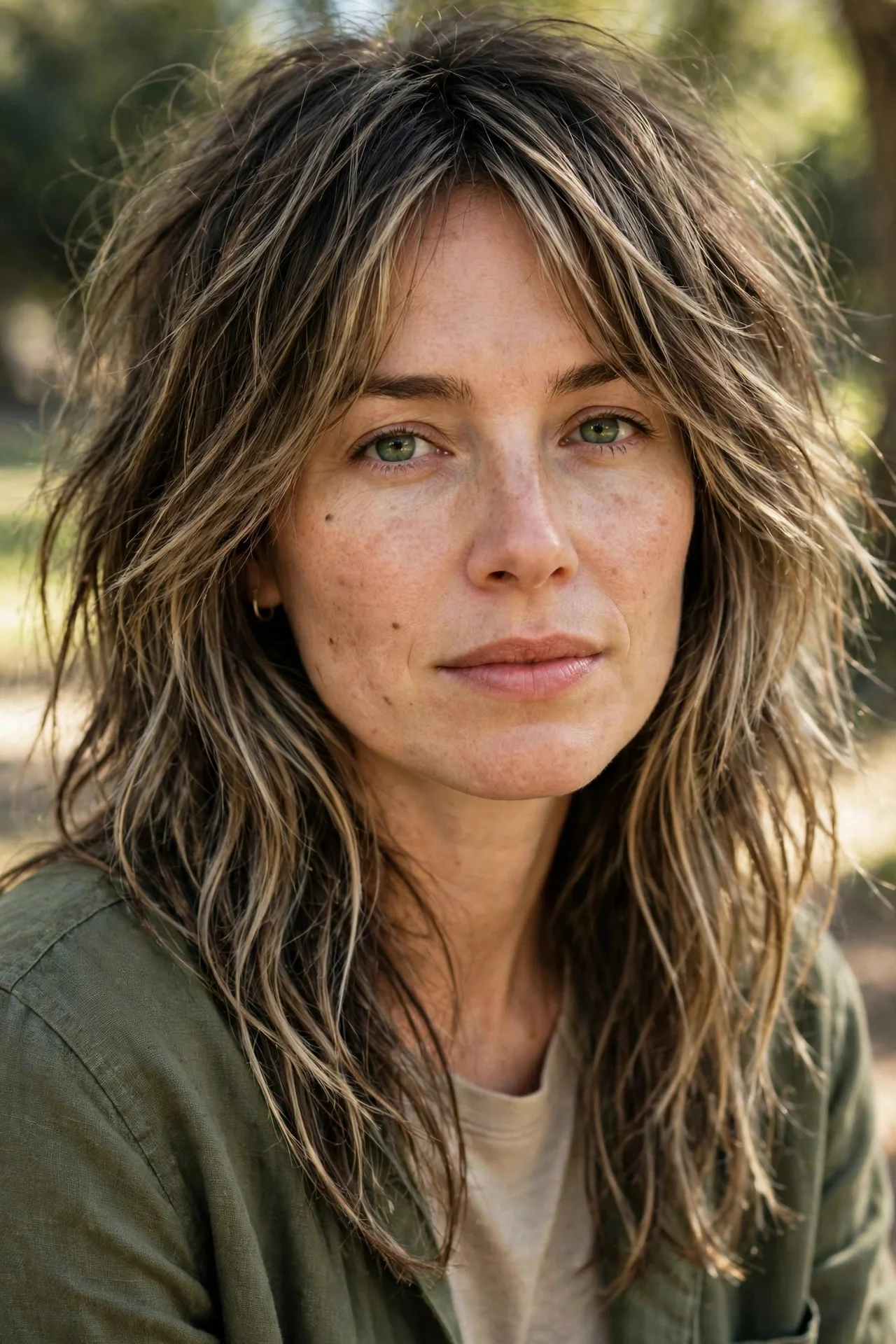
Choppy layers add edge and texture to long hair. Instead of perfectly blended tiers, the layers are cut with more visible separation, so the hair has a piecey, lived-in finish with lots of movement. It is the layered cut for people who want their long hair to look effortless rather than polished. Texture spray is your best friend here. Scrunch it through damp hair and let it air-dry, or use a flat iron to bend random pieces for a deliberately undone look. Choppy layers suit medium to thick hair best, where the texture has something to hold on to.
9. Soft Long Shag
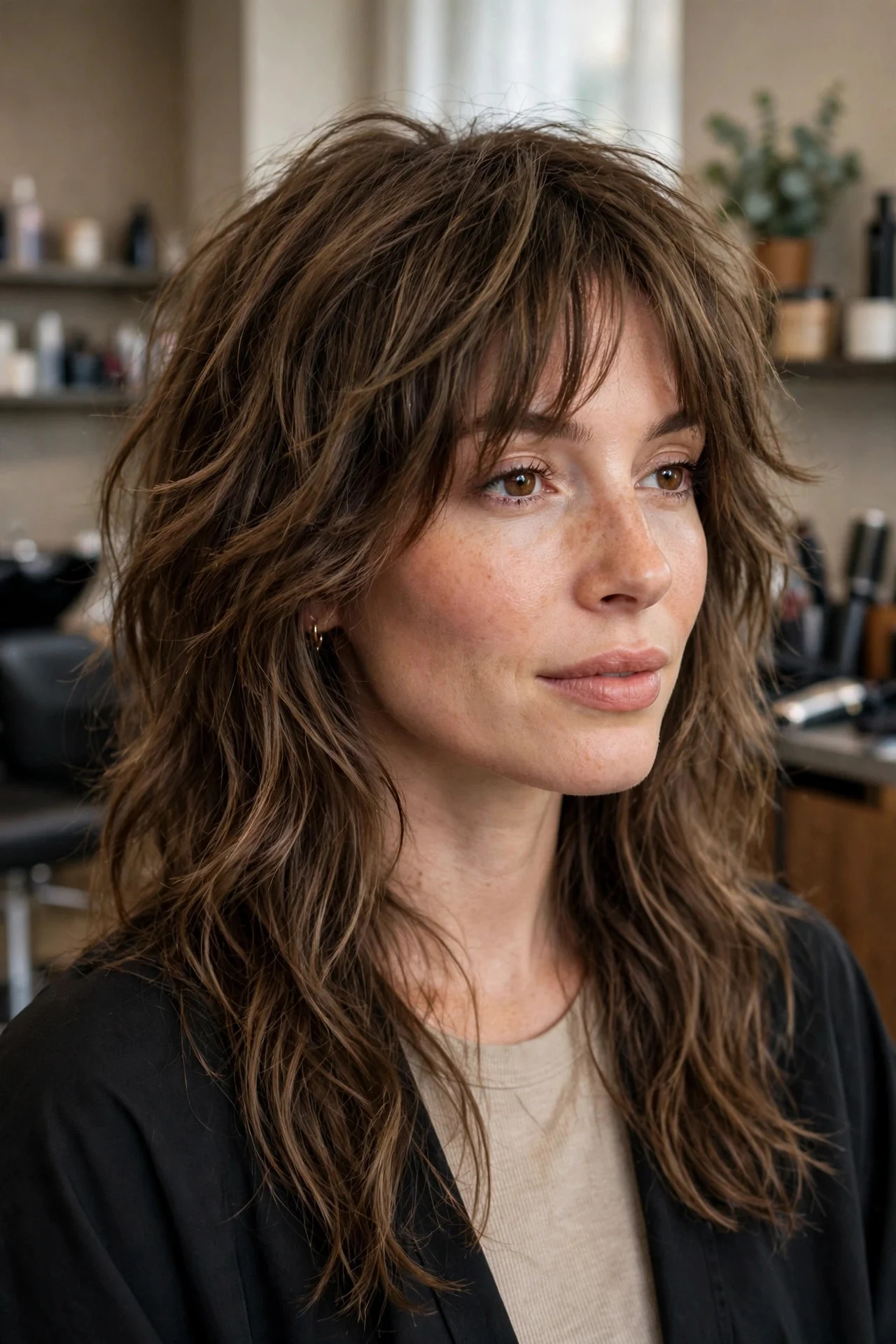
The soft long shag takes the spirit of the classic shag — choppy layers, a fringe, lots of movement — and stretches it over long hair so it stays romantic rather than edgy. Layers are heaviest around the crown and face, then fall longer behind, giving volume on top and length below. Style a long shag with a diffuser or a quick tousle, and do not over-perfect it. This cut is meant to look lived-in, and it is a wonderful choice if your hair is wavy or naturally textured, because the layers enhance the wave instead of fighting it.
10. Long Layers for Thick Hair
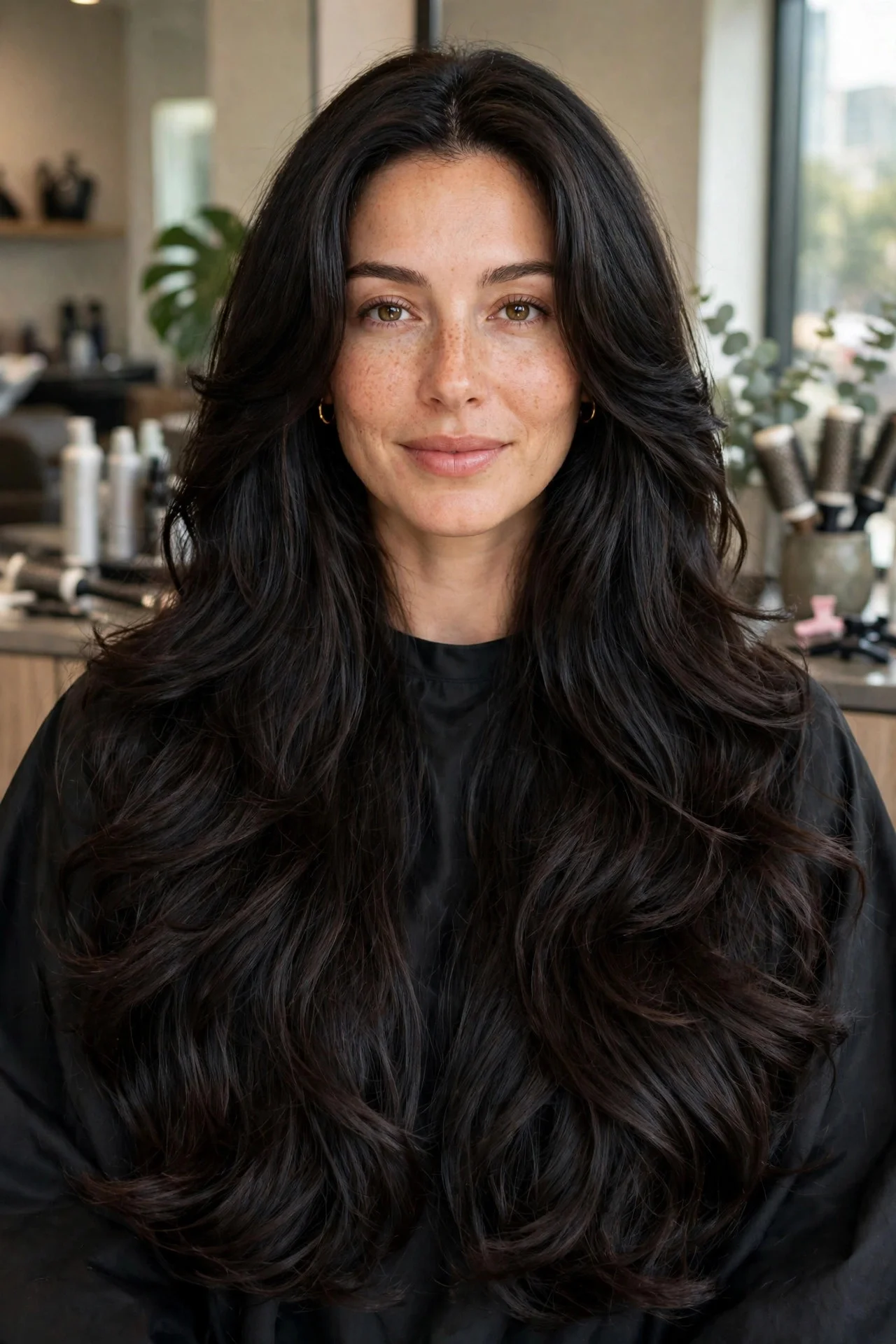
Thick hair benefits enormously from long layers, because internal layering removes bulk and weight without sacrificing length. The result is hair that dries faster, styles more easily, and falls in soft tiers instead of one heavy triangle shape. Ask your stylist to thin from the inside — long internal layers rather than short surface layers — so the outside still looks full and healthy. This is the single most transformative cut for thick, heavy long hair, and it makes every style afterward easier.
11. Long Layers for Fine Hair

Fine hair needs layers handled with care: too many short layers can make the ends look thin, but the right long layers add movement and the illusion of fullness. The trick is keeping the layers long, few, and concentrated around the face, while the ends stay as full as possible. Ask for no more than two or three long layers, and keep the perimeter blunt. Pair the cut with a volumizing blowout — root lift at the crown, gentle bends through the lengths — and fine hair will look thicker, bouncier, and far from flat.
12. Long Layers for Curly Hair
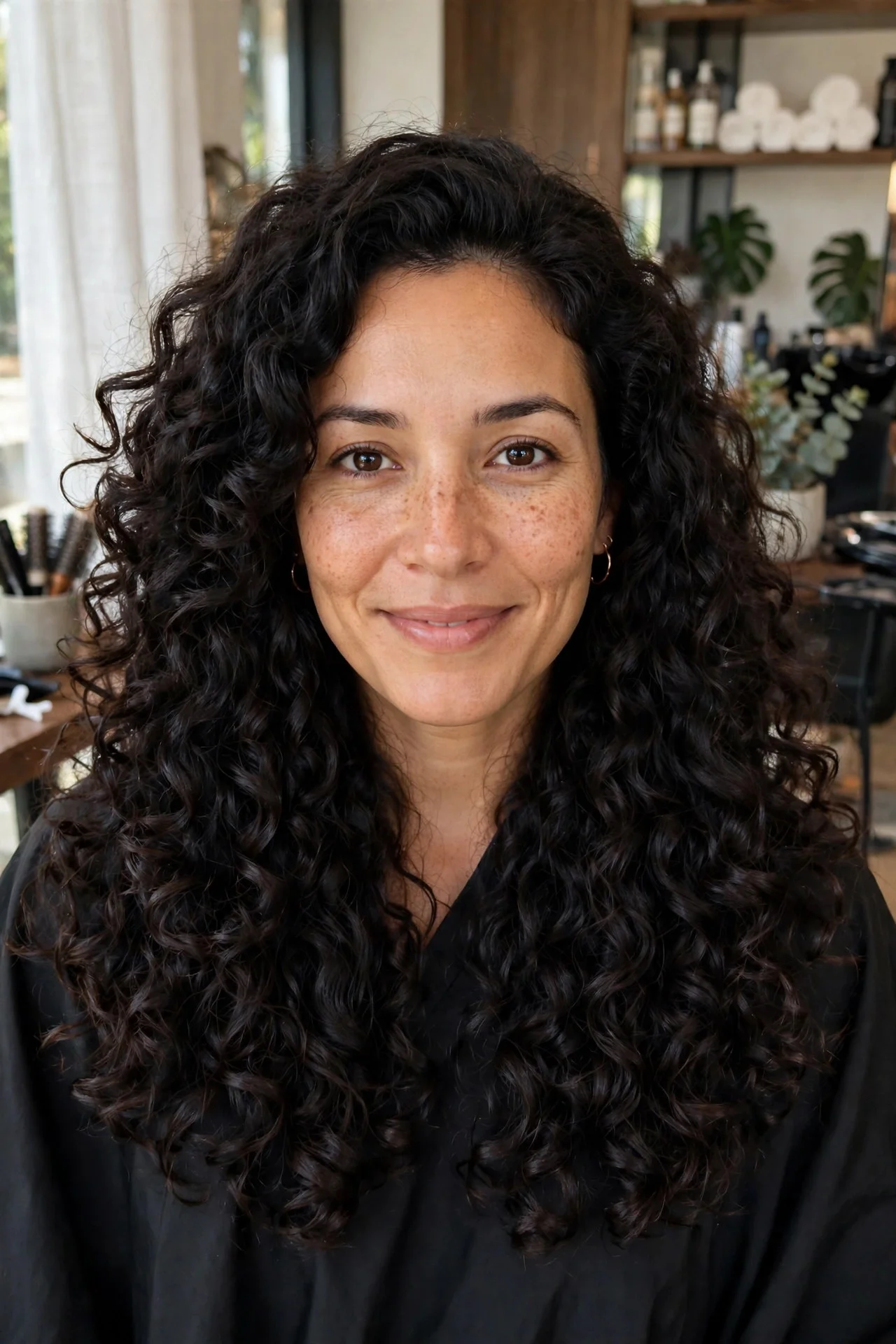
Curly long hair and layers are a perfect match when the layers are cut dry, curl by curl. Proper layering gives curls room to spring up at different lengths, so the hair forms a beautiful rounded shape instead of a heavy pyramid. Each curl gets its own space to move. Find a stylist who cuts curly hair dry and understands your curl pattern. Ask for long layers that preserve length, and keep the shape rounded rather than triangular. With the right layers, long curls look defined, bouncy, and intentionally shaped.
13. Long Layers for Wavy Hair

Wavy hair is the easiest texture to layer, because waves naturally fall into the tiers a layered cut creates. Long layers enhance the wave pattern, add bounce, and stop wavy hair from looking weighed down or shapeless at the ends. Let wavy layered hair air-dry with a little curl cream scrunched through, or diffuse it gently for extra volume. The layers do most of the work: every wave sits at a slightly different length, so the whole head looks full of movement with almost no styling effort.
14. Long Layers for Straight Hair

Straight long hair shows layering more clearly than any other texture, so precision matters. Long, blended layers give straight hair swing and shape, stopping it from hanging like a flat sheet, while still keeping that sleek, polished finish straight hair does so well. Ask for layers that start at the collarbone or below, and keep the ends healthy with regular trims — split ends are more visible on straight layered hair. A sleek blowout or a flat iron finish shows the layering off at its best.
15. Long Butterfly Layers

The butterfly cut in its long form keeps the signature short, bouncy layers around the face and crown, then lets the rest of the hair fall long behind. It is the best of both worlds: the volume and face-framing drama of a shorter cut, with the length you are not ready to give up. This version works best with a bouncy blowout — round brush, layers flipped and curled under — which is what gives the butterfly its wings. If you love volume and movement, the long butterfly is the layered cut to try next.
16. Wispy-End Layers
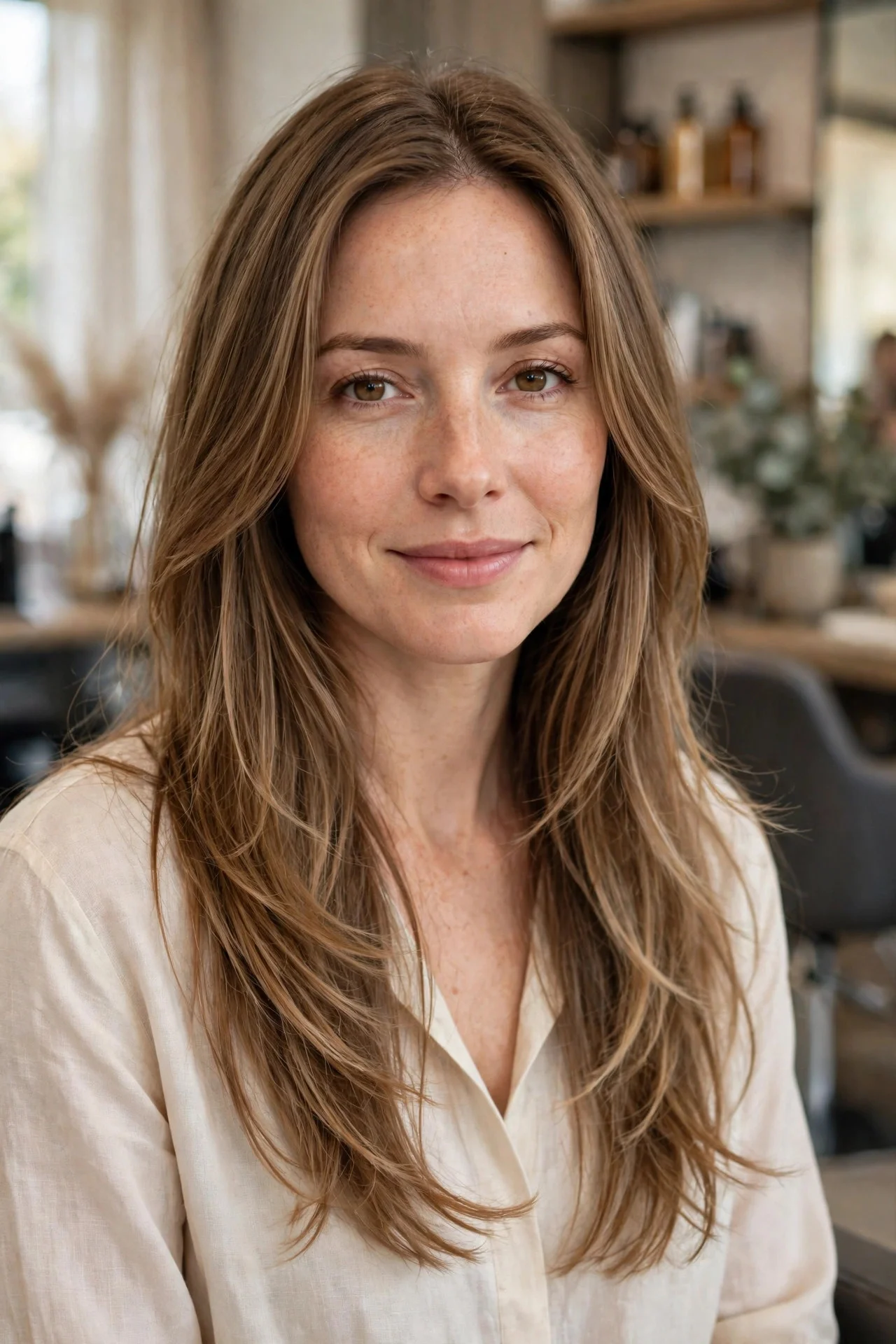
Wispy ends are layers taken to their softest extreme: the ends are point-cut so finely that they taper like feathers, giving long hair a delicate, romantic finish. The cut looks light and airy, and it is beautiful on hair that is naturally fine or medium in texture. Keep wispy ends healthy with regular light trims, because very fine ends can split faster. A light oil on the ends keeps them glossy and prevents the wispy finish from looking dry. This is the layered cut for a soft, dreamy silhouette.
17. Side-Swept Bang Layers

Side-swept bangs with long layers are flattering, grown-up, and easy to wear. The bang sweeps diagonally across the forehead and blends into the face-framing layers, softening the forehead and adding asymmetry that makes the whole cut feel intentional. Blow-dry the bang to the side with a round brush, sweeping it across rather than straight down. This style suits almost every face shape, and it is a great choice if curtain bangs feel too trendy but you still want something around the face.
18. Invisible Seamless Layers

Invisible layers are cut so seamlessly into long hair that you cannot see where one layer ends and the next begins — you only notice the movement. There are no visible steps, no choppiness, just hair that swings, falls, and styles more easily than one-length hair ever could. This is the layered cut to ask for if you want the benefits of layers without the look of layers. It is also the most low-maintenance option here, because seamless layers grow out without any awkward stage. Perfect for people who want a quiet, polished upgrade.
19. Bouncy Blowout Layers

Some layered cuts are designed specifically for the blowout, and this is one of them. Layers are placed to flip, curl, and bounce when blow-dried with a round brush, giving that salon-fresh, voluminous finish that lasts for days. The cut and the style work as a team. Ask for layers that start around the jaw and cheekbone, so there is plenty of hair to curl under and flip out. A large round brush, a volumizing mousse, and a cool shot at the end lock in the bounce. This is the layered cut for people who love a proper blowout.
20. Highlighted Long Layers
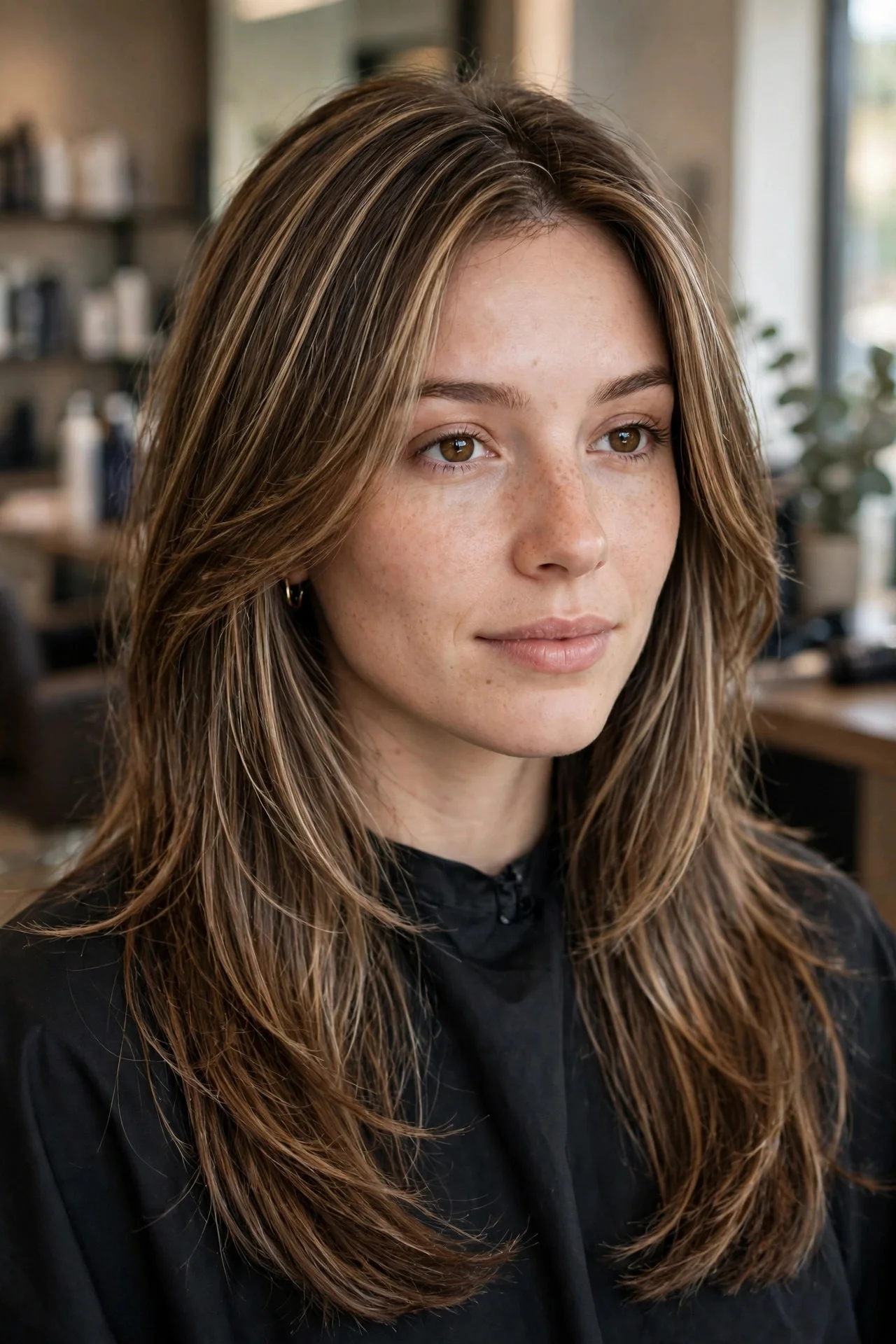
Highlights placed through long layers create depth that a solid color never can. Fine highlights woven through the top layers catch the light, while the underneath stays deeper, so the layered shape reads clearly and the hair looks thicker and more dimensional. Keep the highlights fine and close together for a soft, natural blend, and ask for them to follow your layer placement — brightest around the face and through the ends. This combination is especially flattering on medium and dark brown hair that needs light without a full color change.
21. Long Layers for a Round Face

For a round face, the most flattering long layers are long and vertical: face-framing pieces that start below the chin, layers that fall past the shoulders, and a middle or deep side part that elongates. The goal is length and vertical lines, not width at the cheeks. Avoid short layers that end at cheekbone height, which can widen the face. Instead, keep the shortest layer at jaw length or below, and let the rest fall long. The result is a slimming, elongating frame that still keeps all the softness of long layered hair.
22. Long Layers for a Long Face
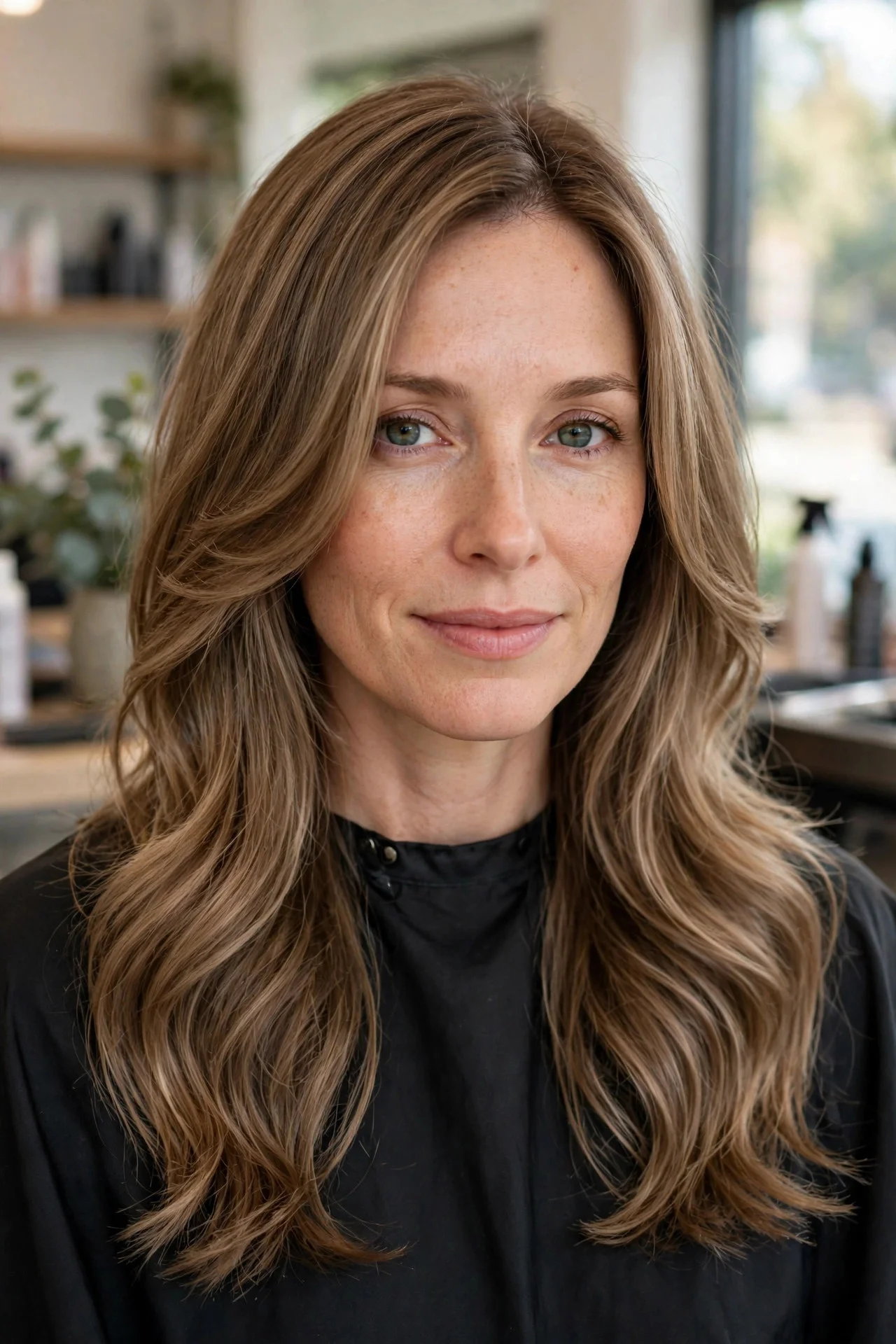
A long face benefits from layers that add width: face-framing pieces starting at the cheekbone, soft waves through the lengths, and a fringe or curtain bangs to shorten the forehead visually. The layers break up the vertical line and add fullness at the sides. Ask for layers with movement around the cheeks and jaw, and style with waves rather than pin-straight lengths. A side part also helps, because it interrupts the long vertical line. The result is balance — length kept, proportions softened.
23. Long Layers with a Middle Part
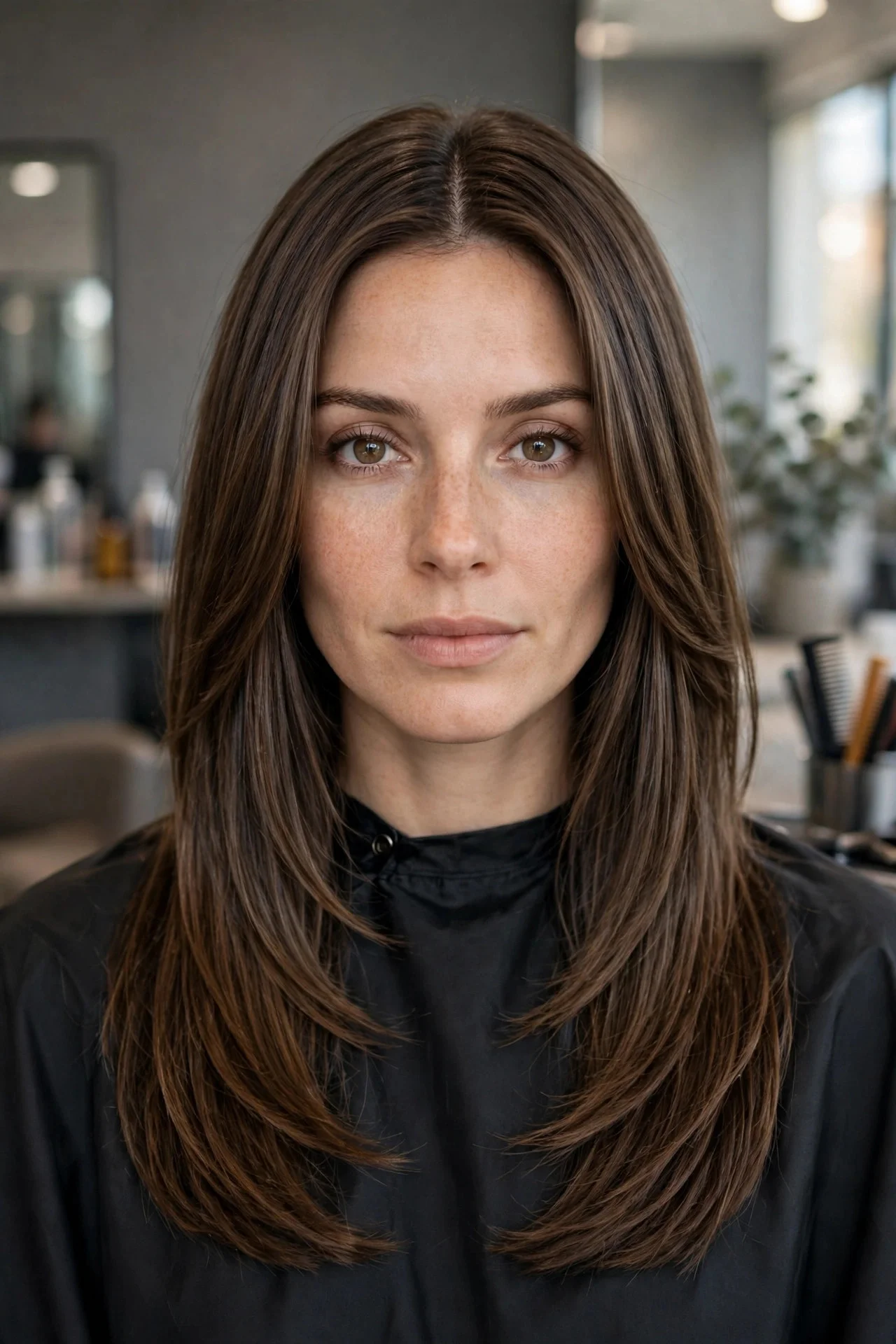
A middle part with long layers is the cleanest, most symmetrical way to wear this cut. The layers fall evenly on both sides, framing the face like a curtain, and the symmetry makes the whole style look polished and intentional, even with minimal styling. This version suits oval and heart-shaped faces especially well. Keep the part precise, let the face-framing layers fall forward slightly, and finish with a smooth blowout or soft waves. It is the minimalist’s layered cut, and it photographs beautifully.
24. Long Layers with a Side Part
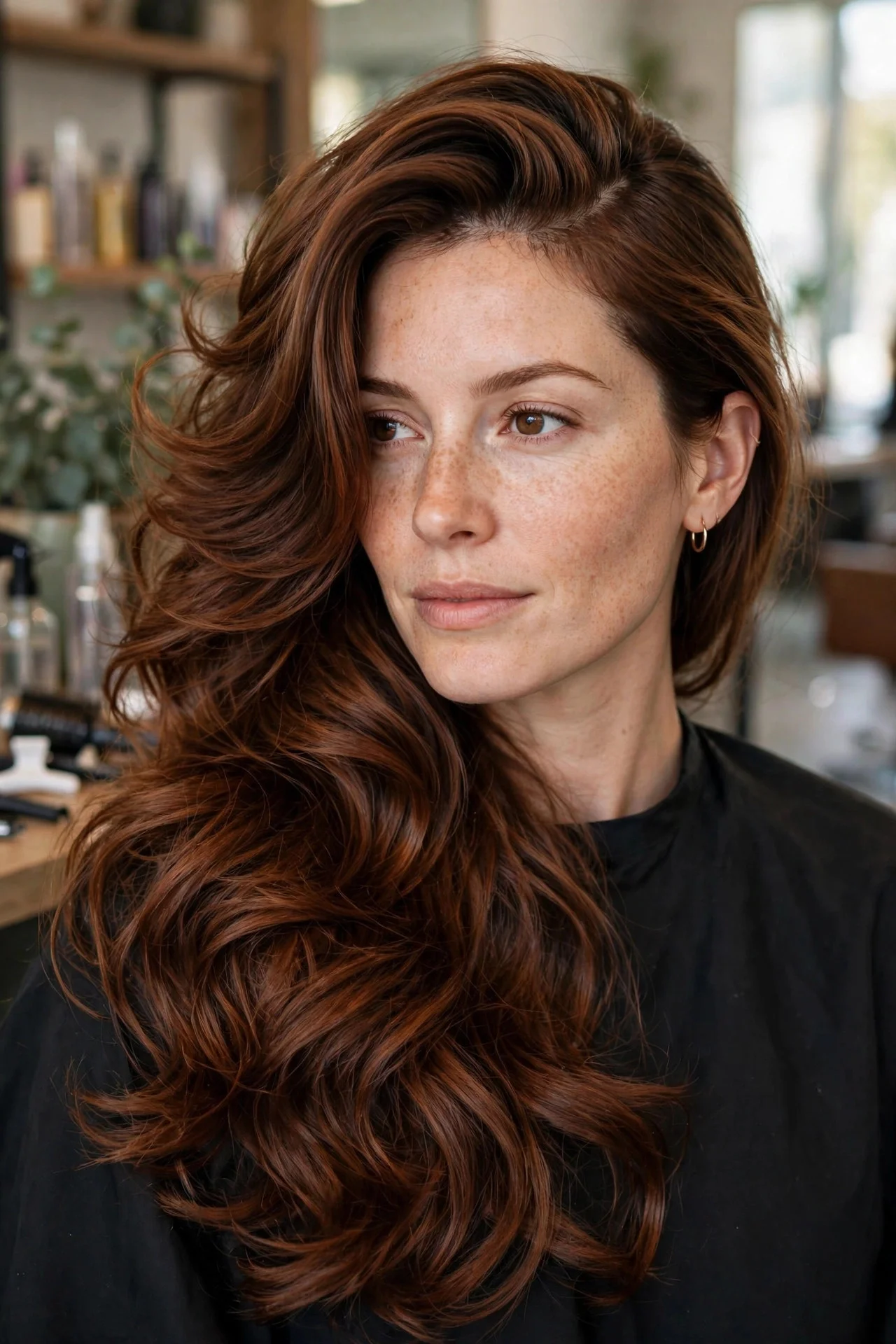
A side part instantly adds volume and drama to long layers. Sweeping most of the hair to one side creates lift at the roots, asymmetry that flatters the face, and a glamorous, red-carpet feel with almost no extra effort. Flip your part to the opposite side of your usual one for instant root lift, and let the longer side fall in soft waves. Side-parted layers are especially lovely for evenings out, weddings, and any occasion where you want your long hair to look styled rather than simply long.
25. Long Layers for a High Ponytail
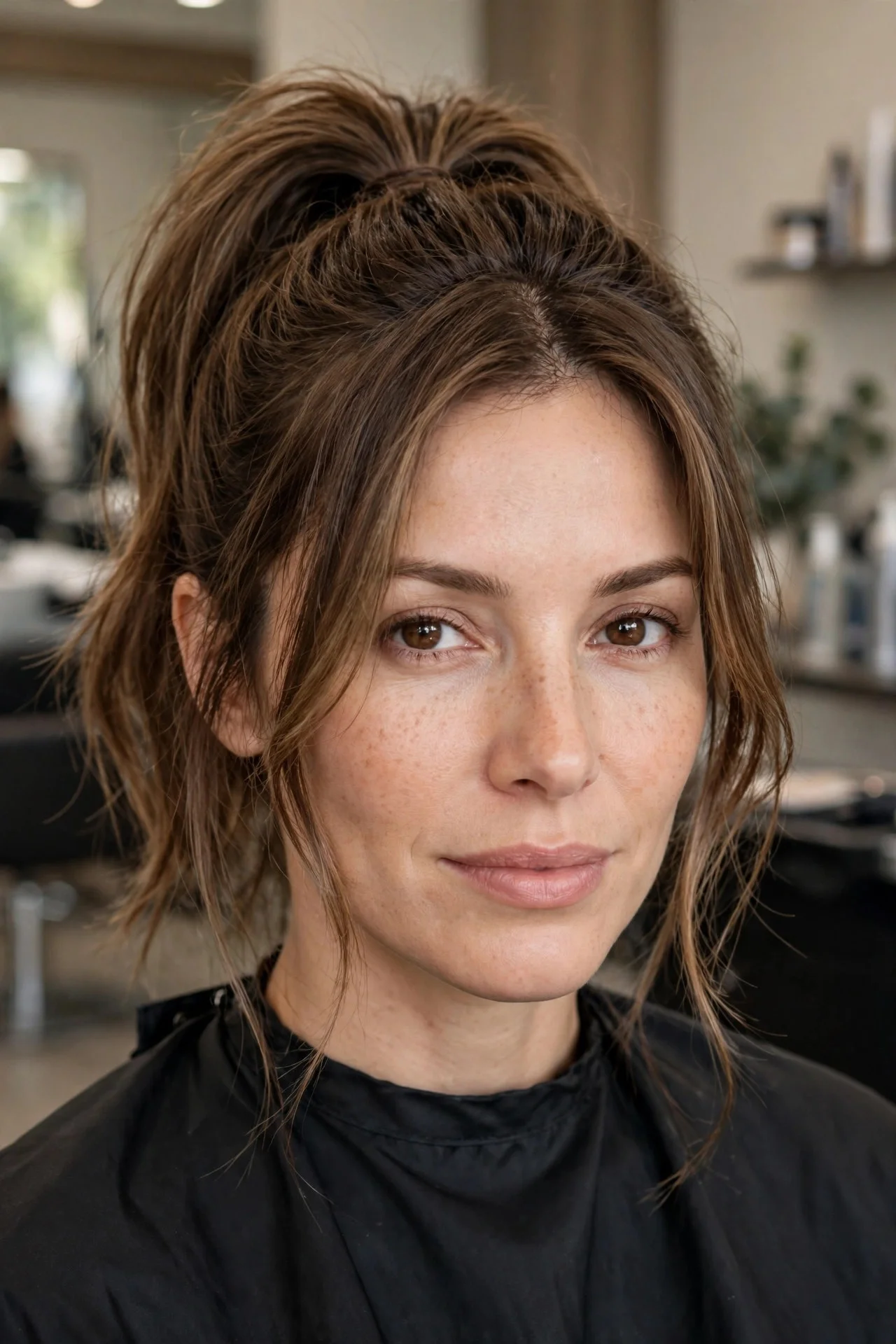
Layers make a high ponytail look better, not worse. Face-framing pieces fall softly around the face when the rest is pulled up, shorter layers add volume at the crown, and the ponytail itself looks fuller because the layers create texture instead of one flat tail. Pull the hair up loosely, let the face-framing layers escape naturally, and wrap a small section around the elastic for a polished finish. This is the layered cut that proves layers are not just for wearing your hair down — they improve your updos too.
26. Half-Up Layered Style
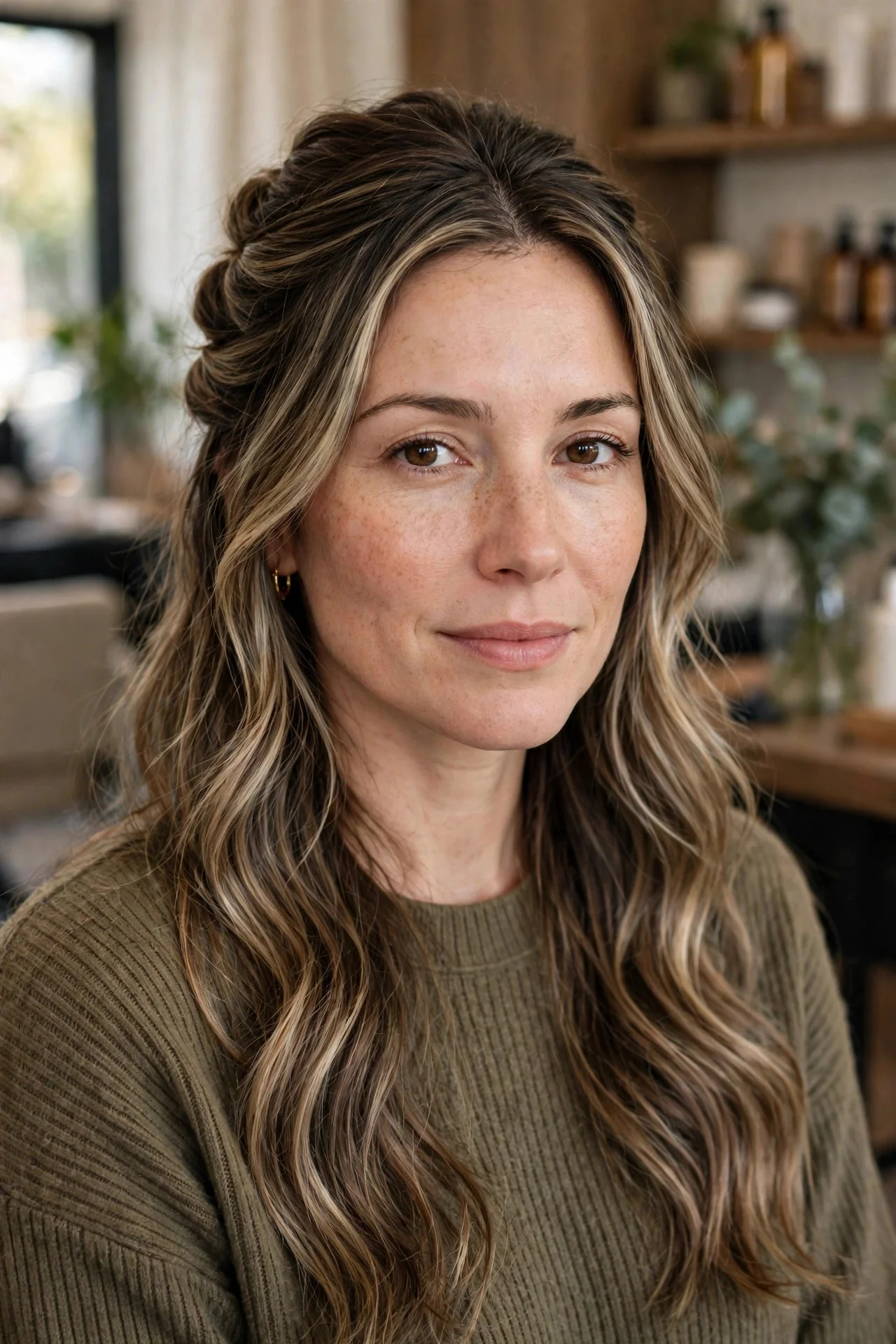
A half-up style is the perfect way to show off long layers. Pulling the top section back reveals the deeper tones and shorter layers underneath, while the rest falls long and full. The contrast between the pulled-back top and the flowing lengths shows the layering off all at once. Twist or loosely braid the top section, leave face-framing pieces out, and let the rest fall in waves. This style works for weddings, dinners, and every day in between, and it is one of the easiest ways to make layered long hair look deliberately styled.
27. Low-Maintenance Grow-Out Layers

Low-maintenance layers are cut long, blended, and seamless, so they grow out gracefully for months without an awkward stage. There are no short pieces to catch up, no harsh lines to maintain — just hair that gets longer and softer over time. Ask for long layers with no piece shorter than jaw length, and stretch your trims to every ten to twelve weeks for a light tidy-up. This is the layered cut for real life: beautiful on day one, still beautiful three months later, and never demanding about upkeep.
Final Thoughts
Layered haircuts for long hair work because they give length a shape. Whether you choose classic long layers, face-framing pieces, a V-cut silhouette, or soft grow-out layers, the key is the same: keep the layers long enough to protect your ends, place the shortest piece where it flatters your face, and keep the blend seamless. Bring a photo of the exact layer length you want to your stylist, talk about your texture honestly, and enjoy long hair that moves, swings, and styles itself a little more easily every day. Save your favorite of these 27 ideas, share this list with a friend who is growing their hair out, and come back to Glossy Aura for more haircut inspiration all season long.

One Comment