
32 Winter Hair Braid Ideas That Keep Hair Protected and Pretty All Season
I learned to love braids the winter my hair started snapping. Every January the same thing happened: the cold wind dried my ends, my wool scarf rubbed them raw, and by February my ponytail was thinner than it had been in October. A hairdresser friend watched me complain about it for exactly one coffee before she said the obvious thing — stop leaving your hair loose in winter. A braid is not just a hairstyle, it is a coat for your hair: it keeps the ends tucked away from the wind, stops the scarf friction, and holds a style for two or three days when loose hair would have given up by lunchtime.
Here is the one piece of practical advice I give everyone who asks me about winter braids: braid your hair when it is about ninety percent dry, and work a pea-sized drop of leave-in oil or a light hair cream through the ends before you start. Braiding bone-dry hair creates frizz; braiding soaking-wet hair traps dampness for hours. That almost-dry moment is when a braid holds its shape, stays soft, and comes out the next morning as the prettiest waves you will get all winter. The thirty-two ideas below cover every length and every kind of winter day — from a five-minute braid before school drop-off to a braided updo that survives a whole holiday party.
Classic Braids, Winter-Ready
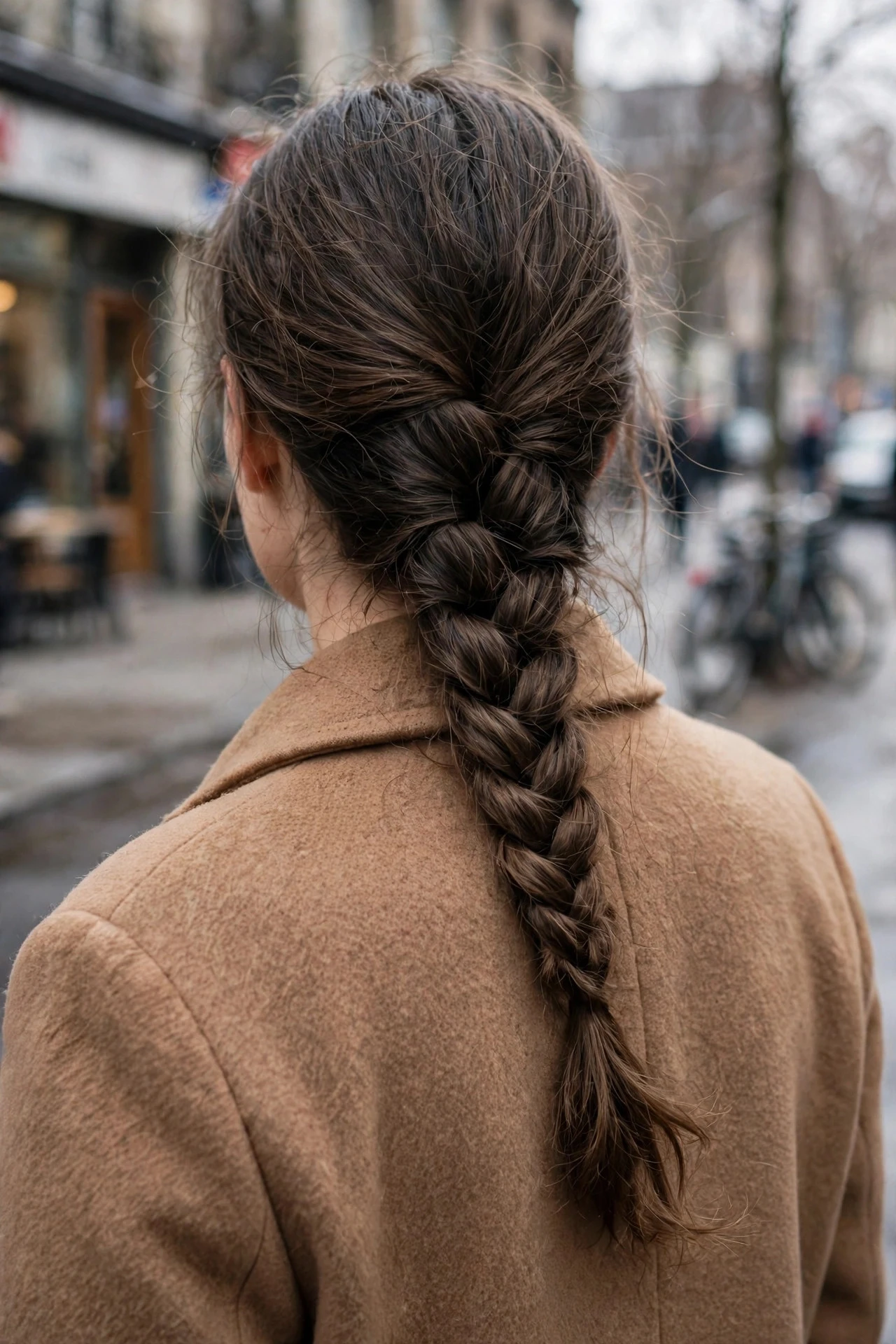
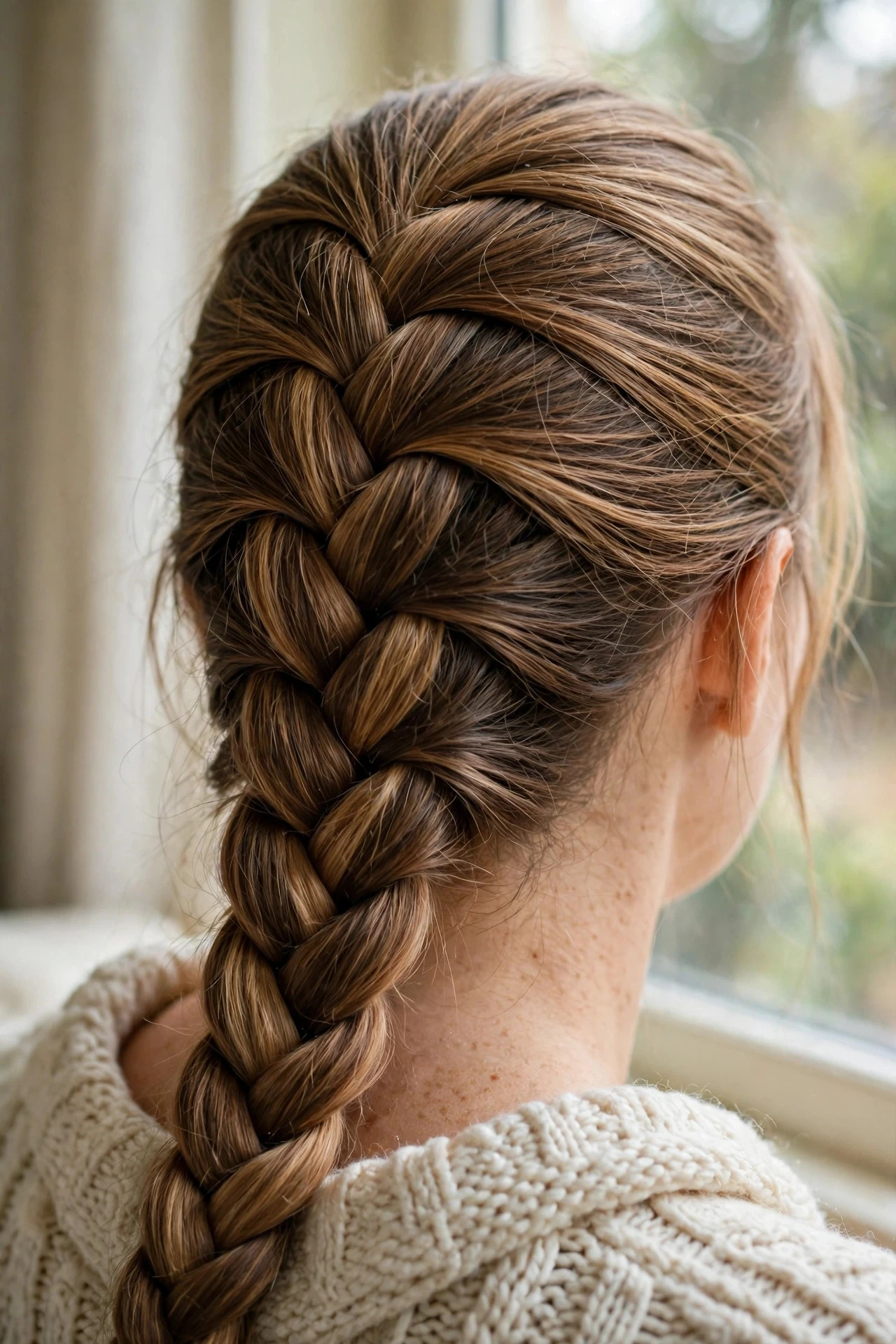
1. The Classic French Braid, Low and Loose
The braid every girl learned first, and still the best winter workhorse: a French braid started at the crown and finished low at the nape, pulled gently loose so it looks soft rather than school-strict. It suits medium to long hair and every face shape. Braid it a little looser than you think — winter hair needs room, and a tight braid on cold, dry hair pulls at the roots. Tuck the tail under a coat collar and it stays neat all day; undo it at night and you wake up to soft waves.
2. Dutch Braid Crown
The Dutch braid is a French braid in reverse — you cross the strands under instead of over — so the braid sits on top of the hair like a crown instead of sinking into it. Start one Dutch braid at each temple, braid them back and pin them together at the crown, and you have a style that keeps every strand off your face and out of your coat collar. It suits thick hair best, because the raised braid shows up beautifully.
3. The Everyday Fishtail Braid
A fishtail looks far more complicated than it is: split the hair in two and keep passing a thin piece from one side to the other. The flat, herringbone pattern photographs beautifully and holds up under a beanie better than any other braid, because the flat shape does not get squashed. It suits long hair best — below the shoulders gives you enough length for the pattern to show.

4. Side-Swept Loose Braid
Sweep all your hair over one shoulder and braid it loosely, leaving the face-framing pieces out. This is the braid for days when you want to look like you tried but only had four minutes. It suits wavy and curly hair beautifully, because the texture does the decorating, and it keeps hair off your back so it does not tangle in a coat zip or a scarf. Pull the braid gently apart once it is tied and let two thin strands fall at the front.

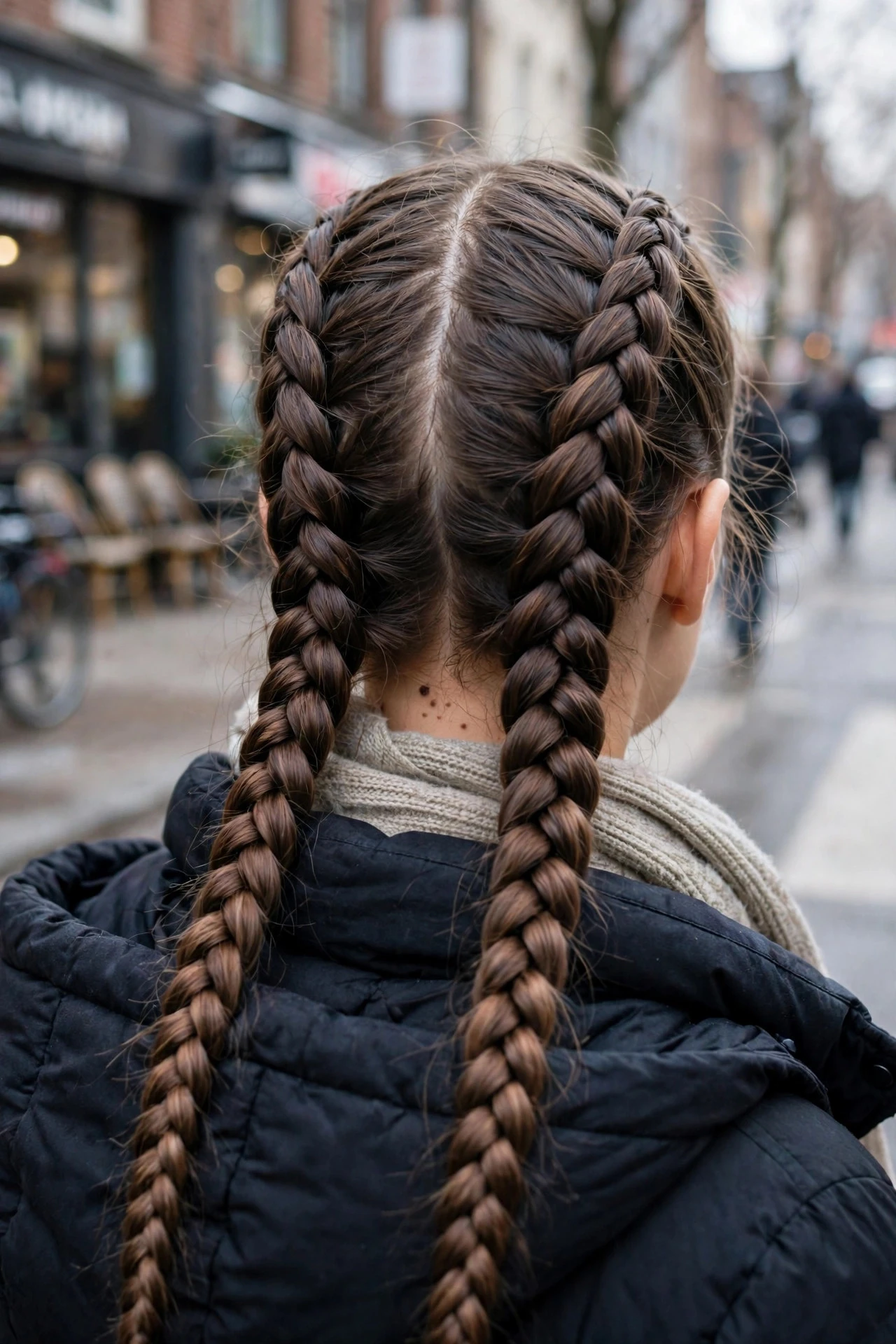
5. Double Dutch Braids
Two Dutch braids, one on each side, parted down the middle — the boxer braid look, softened for winter. It is the most practical braid on this list: nothing moves, nothing falls in your face, and it survives a hat, a hood, a workout and a long commute. It suits long hair and thick hair best, and it is my pick for anyone who wears a beanie every day, because the braids sit flat enough to slide a hat over.
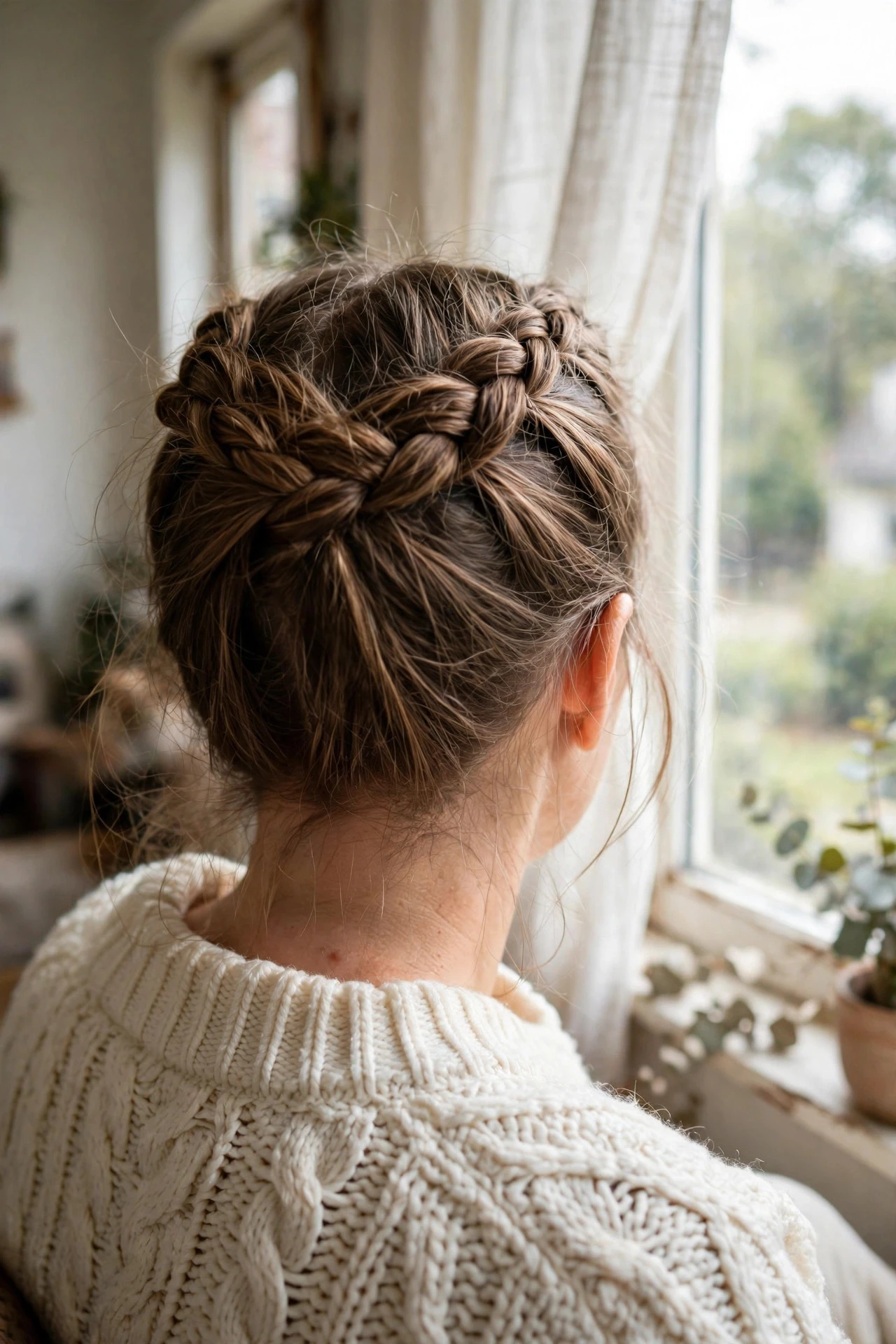
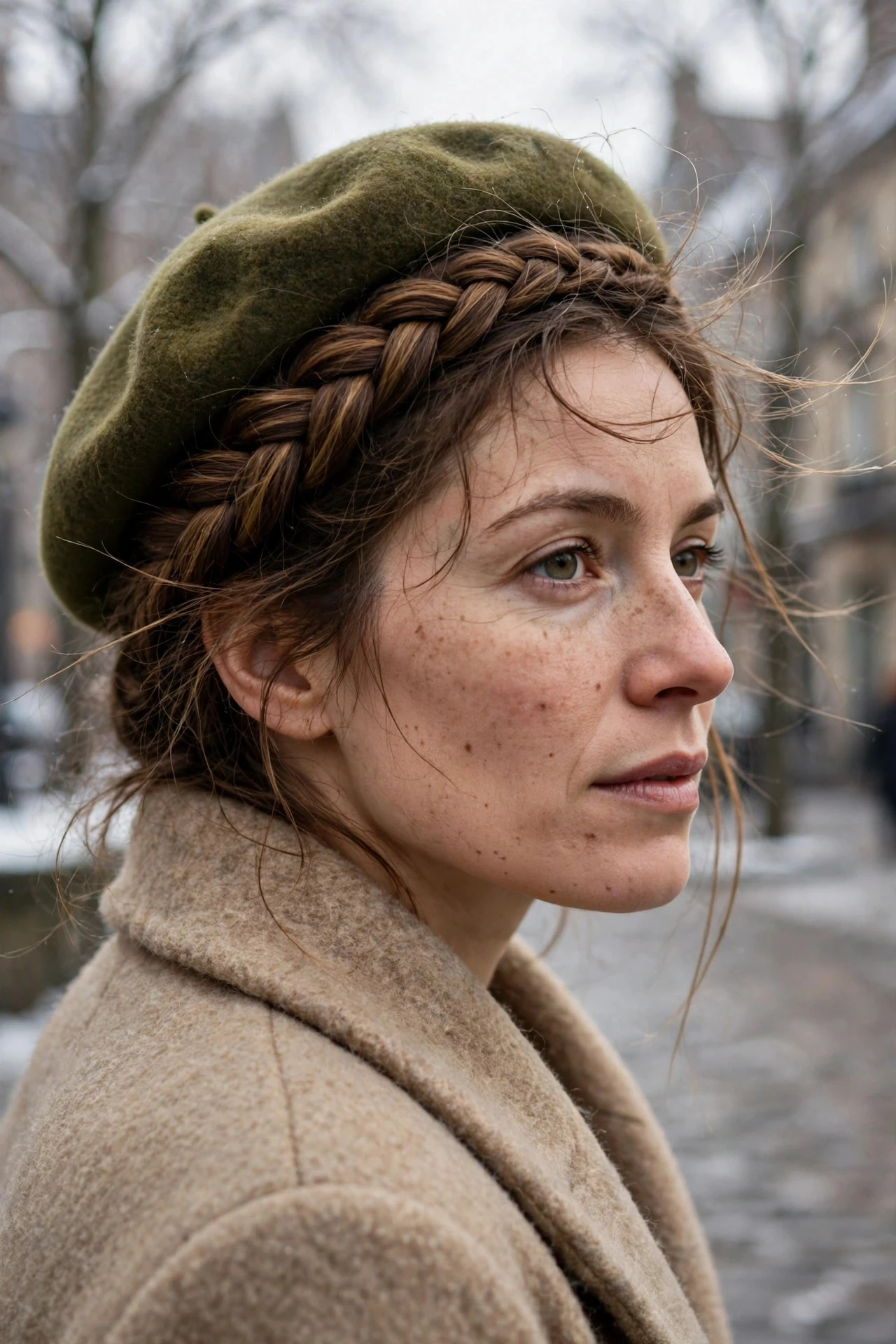
6. The Milkmaid Braid
Two braids wrapped up and over the head and pinned into a crown — the milkmaid braid is the prettiest way to get all your hair up and out of the way in winter. It suits medium to long hair and looks lovely with a knit headband or a beret. Braid each side loosely, cross them over the top, and pin with bobby pins that match your hair colour — criss-crossed pins hold far better than single ones.
7. Waterfall Braid for Longer Hair
The waterfall braid lets strands fall through the plait like water over a ledge, so you get the beauty of a braid with most of your hair still down. It suits long, straight or wavy hair best — you need length for the falling pieces to show — and it is the braid I choose for holiday photos, because it looks intricate from the back and effortless from the front.

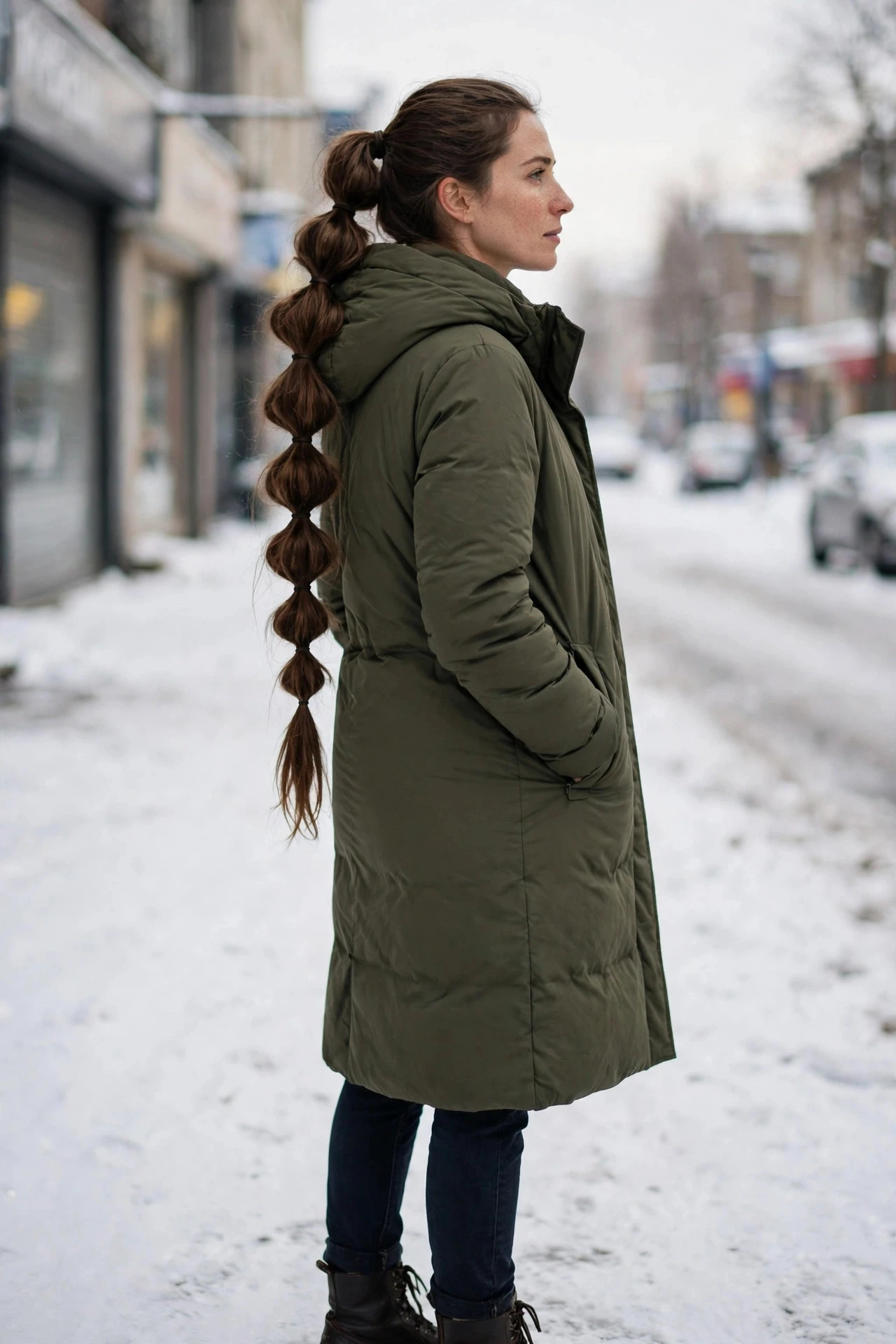
8. Bubble Braid
No actual braiding required: tie a ponytail, add elastics every few inches, and pull each section out into a bubble. The bubble braid is the easiest style on this list and the most forgiving on second-day hair, because the volume hides everything. It suits long hair and thick hair best, and it is brilliant under a coat — the bubbles keep their shape where a normal braid would flatten.
9. Braided Low Ponytail
Braid the top half of your hair — a French or Dutch braid from the crown — then gather everything into a low ponytail at the nape. You get the interest of a braid with the ease of a ponytail, and it is the style I wear to work most in winter, because it survives a coat, a scarf and a full day at a desk. It suits medium to long hair and works on straight, wavy or curly hair.

10. The Rope Twist Braid
Two strands twisted around each other, again and again — the rope twist is the fastest real braid there is, and it looks like something far harder. Split a ponytail in two, twist each half the same way, then twist the two halves around each other in the opposite direction, and it locks itself in place. It suits medium to long hair and is the best braid for fine hair, because the twist makes thin hair look twice as thick.
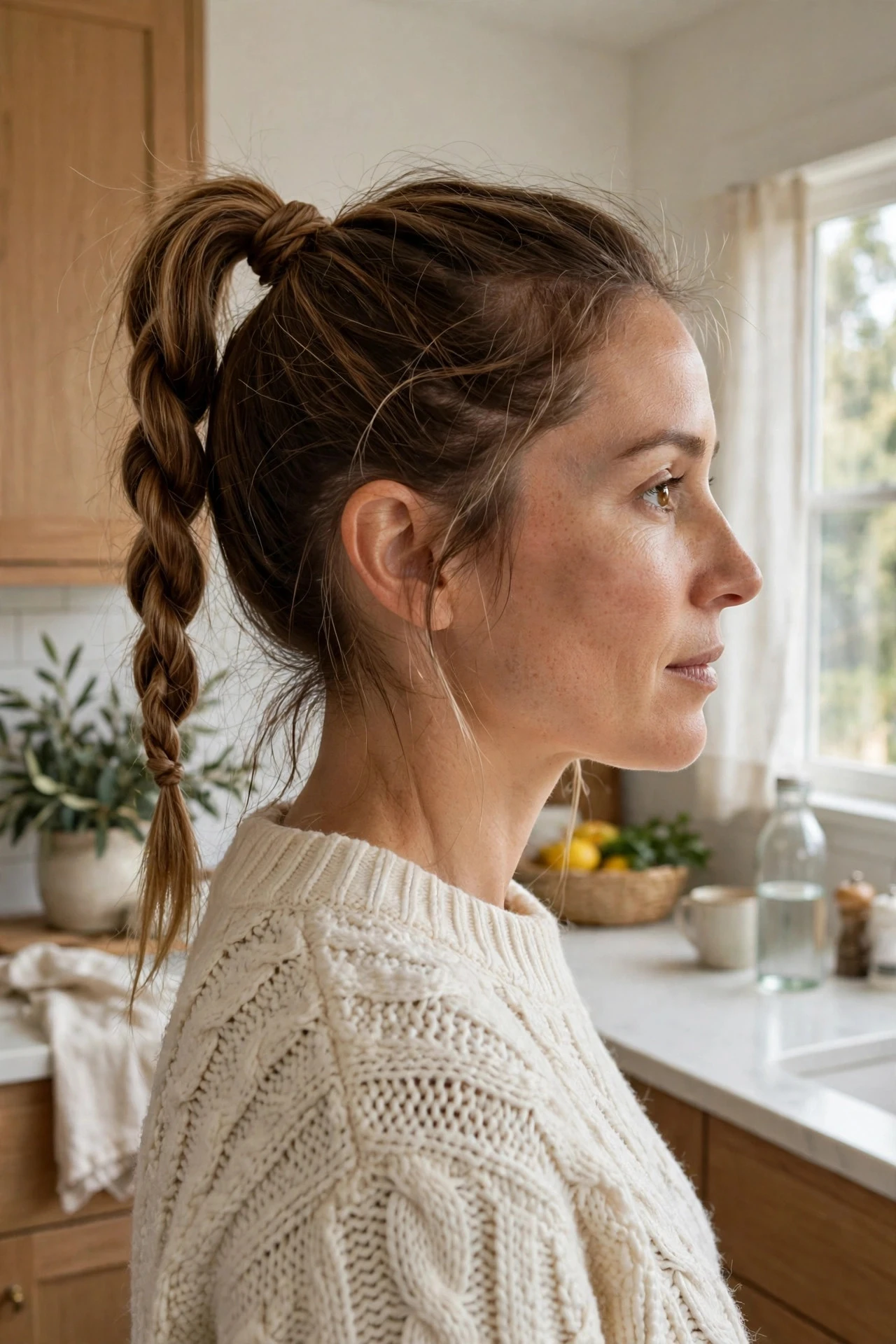
11. Four-Strand Braid
Four strands instead of three gives you a wider, flatter braid with a woven, almost basket-like pattern — the braid that makes people ask where you got your hair done. It suits long, thick hair best, because you need enough hair for four strands to look substantial. The rhythm is simple once your hands learn it: the outer strand always goes under, then over.
Quick Comparison
| Braid Style | Best For | Time to Do | How Long It Lasts |
|---|---|---|---|
| Classic French Braid | Everyday wear, under a coat collar | 5 minutes | 1–2 days |
| Dutch Braid Crown | Keeping hair off the face, thick hair | 10 minutes | 2 days |
| Everyday Fishtail Braid | Windy days, under a beanie | 8 minutes | 1–2 days |
| Bubble Braid | Second-day hair, quick volume | 5 minutes | 1 day |
| Goddess Braids | Protecting hair for weeks, cold snaps | 1–2 hours (salon) | 2–4 weeks |
| Braided Low Bun | Work, weddings, holiday parties | 10 minutes | All day |
Protective Braids That Actually Guard Winter Hair
12. Goddess Braids
Goddess braids are thick cornrows braided close to the scalp, usually with extensions woven in — the gold standard of protective winter styling. They keep every end tucked away from cold air and scarf friction for two to four weeks, which is exactly what fragile winter hair needs. Book a braider you trust and ask for medium-sized braids, not tiny ones: medium braids put less tension on the edges and are easier to take out.

13. Braided Low Bun
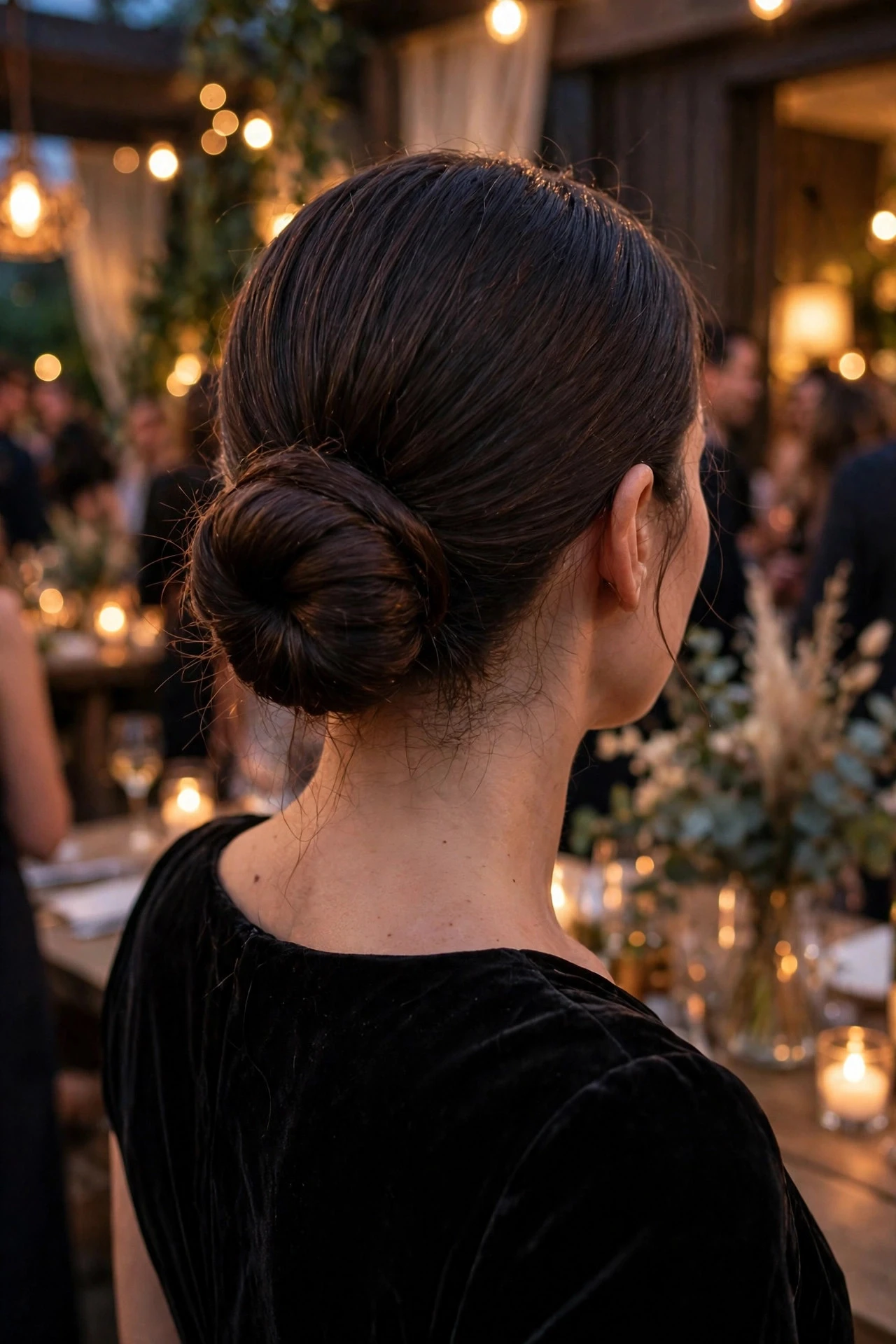
Braid your hair into a low ponytail, then coil the braid into a bun at the nape and pin it — a braided low bun is the most elegant thing you can do with ten minutes. It suits medium to long hair, works for the office and for a wedding, and it keeps every end hidden from the wind. The braid texture stops the bun looking severe, and a few face-framing pieces pulled loose keep it soft. Add a pearl pin and it becomes a holiday-party updo.

14. Half-Up Crown Braid
Take two small braids from each temple, bring them to the back of your head and pin them together — the half-up crown braid keeps the front of your hair controlled while the rest stays down and soft. It suits every hair length from a lob upwards and every texture, and it is my answer to winter hat hair: the crown braid holds its shape under a beanie, so when the hat comes off indoors you still look finished.

15. Braided Pigtails for Winter Weekends
Two low braids, one on each side, worn loose and a little undone — braided pigtails are not just for children, and a soft version is one of the cosiest weekend looks there is. They suit long hair and look wonderful with a chunky knit and a beanie, because the braids sit low enough to stay out of the hat. Braid them over the shoulders rather than behind, so you can see what you are doing, and pull the sides loose for softness.

16. Braided High Ponytail
A high ponytail with a braid running through it — braid the top section back, gather everything high, and braid the tail — gives you height, movement and a style that survives a whole day. It suits long hair best and is the braid for anyone who hates hair on their neck in a heated office or a crowded party. Wrap a strand around the base to hide the elastic, and keep the braid in the tail loose so it swings.

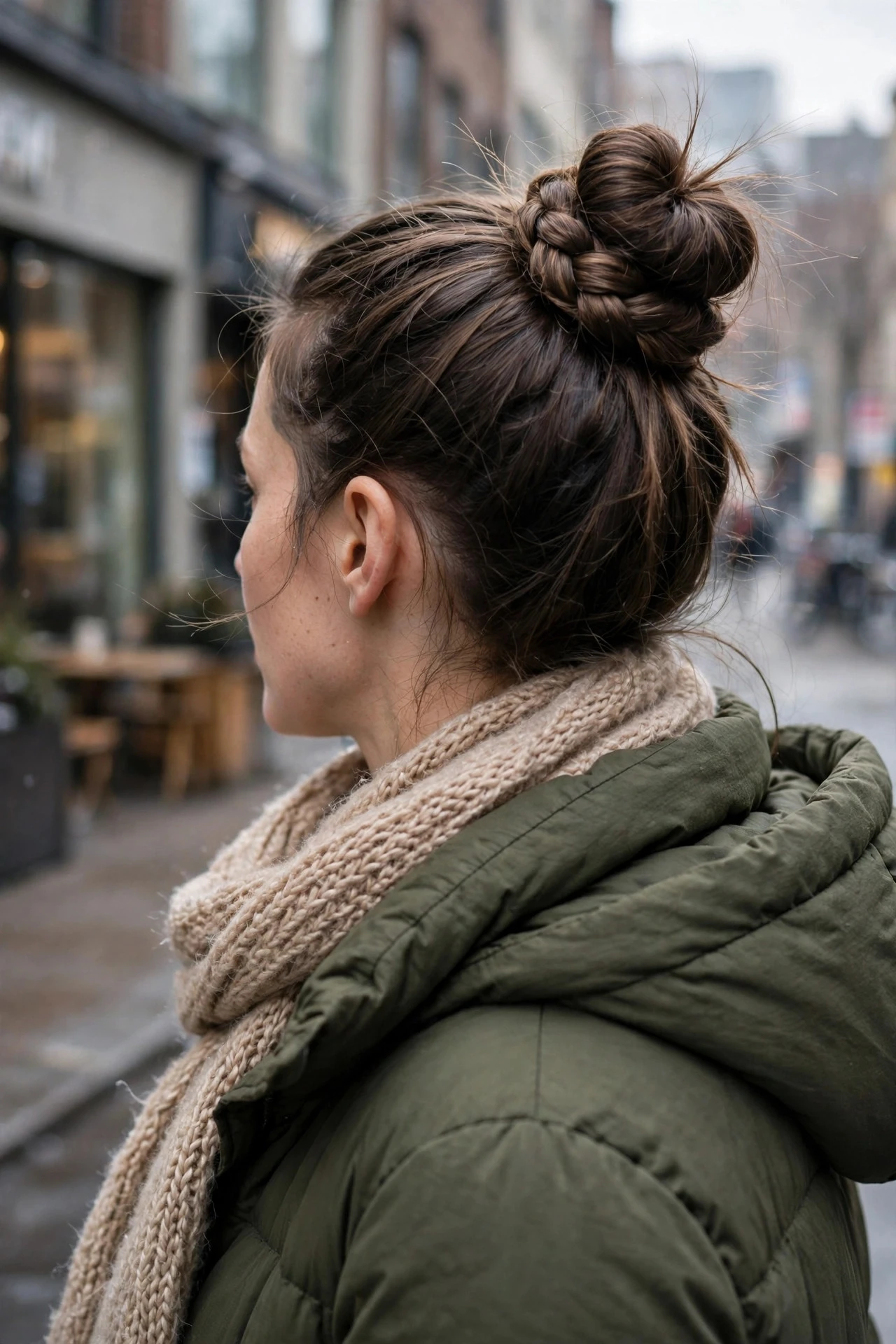
17. Braided Top Knot
Gather your hair into a high bun, braid the tail first, then wrap the braid around itself — a braided top knot has all the texture a plain bun lacks, and it stays put through wind, hats and long days. It suits medium to long hair and is the style for the woman who wants her hair completely out of the way: under a beanie, at the gym, on a ski trip. The braid stops the knot from sliding, which is the usual problem with a top knot on smooth winter hair.
18. Braid with a Silk Scarf Woven In
Weave a thin silk scarf into a three-strand braid as if it were a fourth strand, and you get colour, shine and a style that looks like it took an hour. It suits medium to long hair and is the prettiest way to add a festive touch without any heat or product. Choose a scarf in a winter shade — deep plum, forest green, burgundy — and let the ends hang with the braid tail, or tie them into a small bow.

19. Beanie-Friendly Loose Braid
The braid designed around the hat: a low, loose single braid, started at the nape rather than the crown, so a beanie slides on and off without squashing anything. It suits every length from a lob down and is the honest answer to the question every woman asks in January — what do I do with my hair under a hat? Braid loosely, tie low, and let the beanie sit on top; when you take the hat off, the braid is still intact and the hat-hair problem simply does not happen.
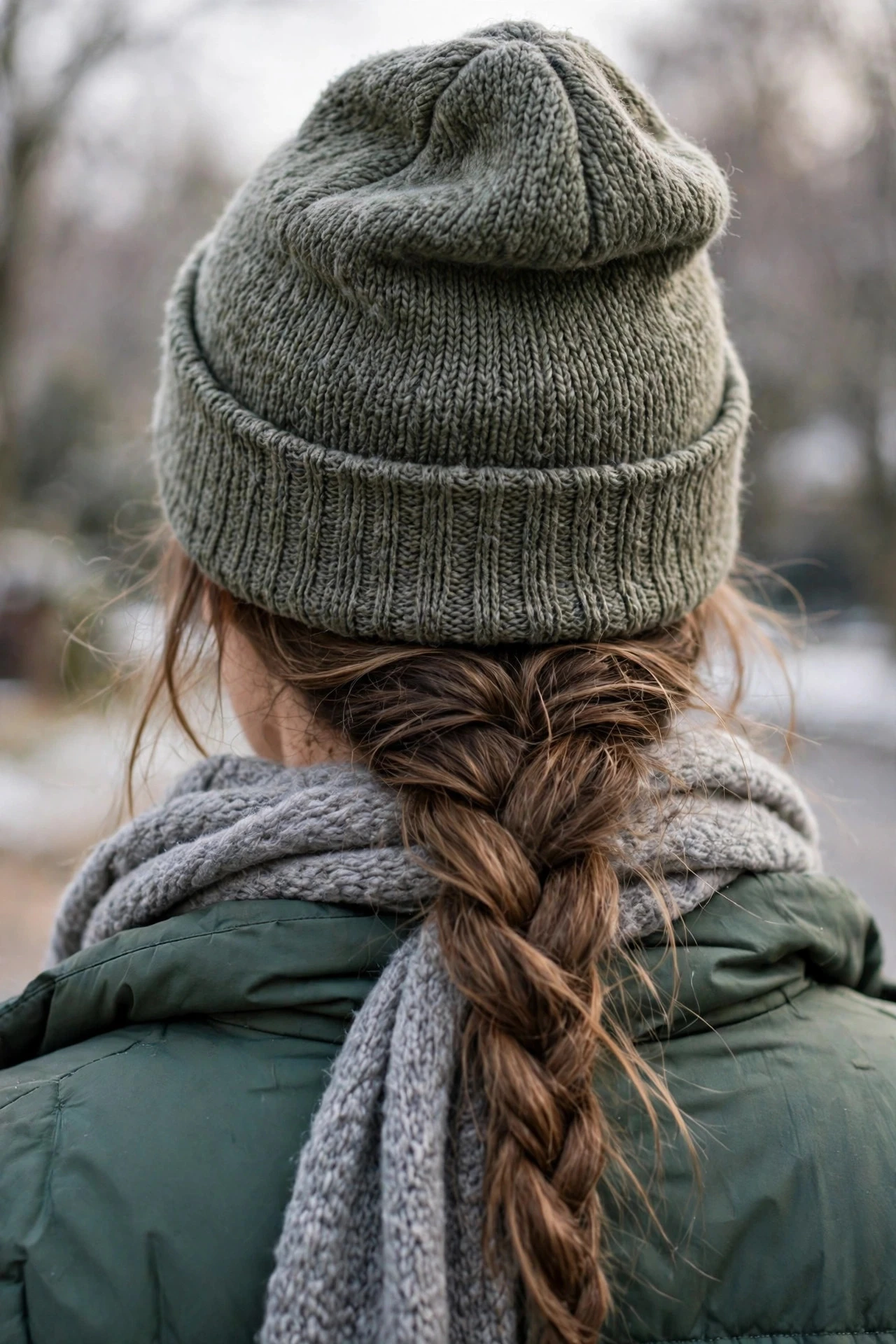
20. Braided Bob for Short Hair
Short hair can braid too — a braided bob uses small braids at the front and sides to add detail to a chin-length cut. Take a small section at each temple, braid it back and pin it, or run one tiny French braid along the parting. It suits bobs and lobs best, and it is the answer for anyone growing out a fringe in winter: the braid keeps the growing pieces out of your eyes without a single bobby pin showing.
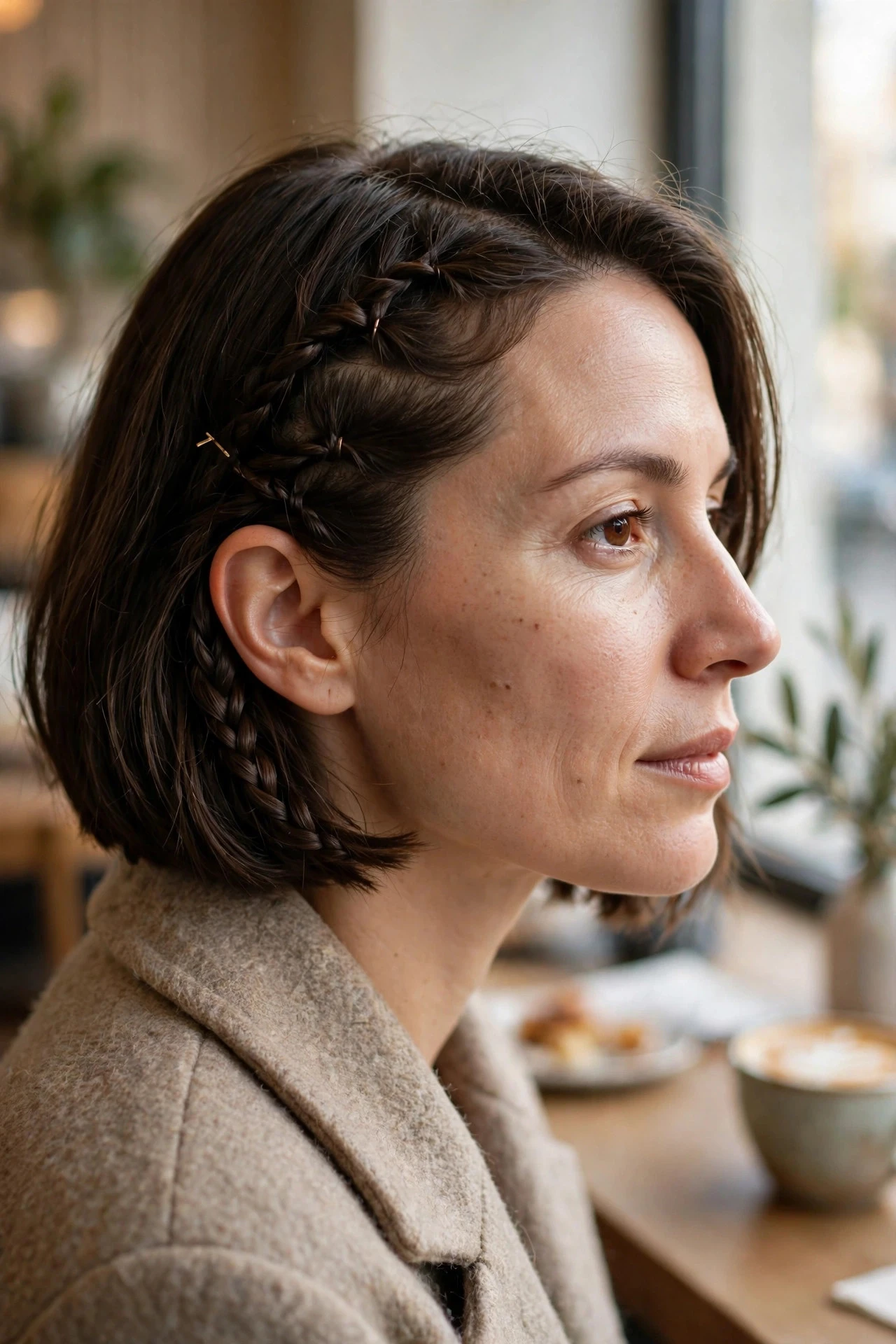
21. Pull-Through Braid with Volume
The pull-through braid is made from a series of small ponytails looped through each other, then pulled wide — no real braiding, but enormous volume. It suits fine or thin hair better than any true braid, because you control exactly how full each section looks, and it is the style for anyone who has always wanted a thick braid but does not have thick hair. Work in small sections and tug each loop gently wider as you go, and use a little dry shampoo at the roots first for grip.

Soft, Romantic & Party Braids
22. Loose Boho Braid with Face-Framing Pieces
A wide, soft braid worn over one shoulder, with long face-framing pieces left out at the front — the boho braid is the romantic one, and it suits wavy and curly hair best, because the natural texture makes it look effortless. Braid it loosely, pull the sides wide, and let the front pieces fall where they like; the imperfection is the point. It is the braid for a winter date night or a cosy dinner, worn with a soft knit and a long coat. Mist it with a flexible-hold spray so it keeps moving.

23. The Braided Headband
Braid a section of hair from behind one ear, bring it across the top of your head like a headband, and pin it behind the other ear — a braided headband keeps hair off your face without any accessory at all. It suits medium to long hair and is perfect for anyone who hates the headache a real headband gives you. Start the braid a little behind the hairline, so it sits naturally, and pancake it gently so it reads as a band rather than a rope.
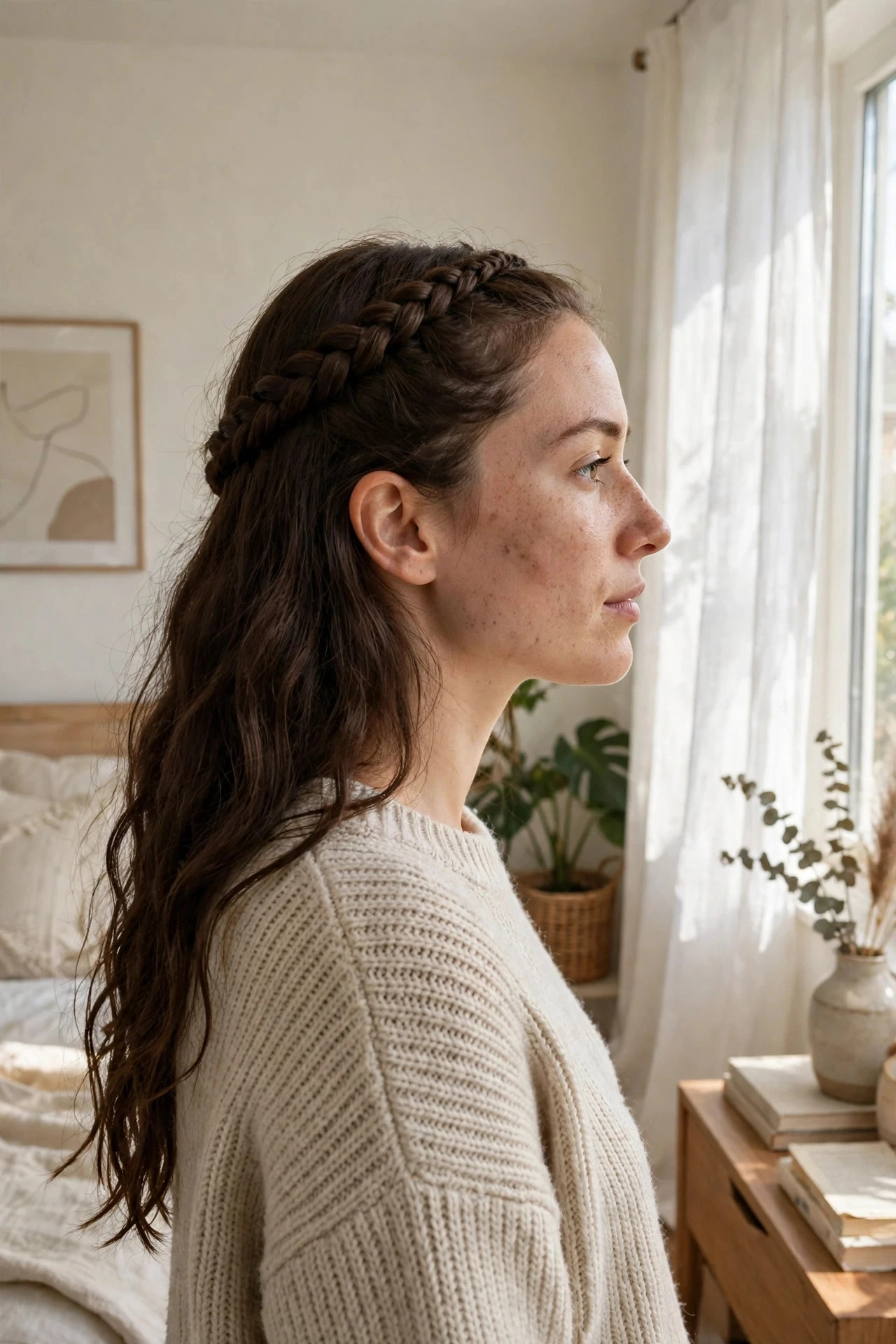
24. Braided Bangs for Growing-Out Fringe
Growing out a fringe in winter is miserable — the pieces fall in your eyes, they frizz in the cold, and a hat makes them worse. A braided fringe solves all of it: take the front section, French-braid it along the hairline, and pin it at the temple. It suits every length and is the kindest way to grow a fringe out, because the braid holds the short pieces flat and protected.
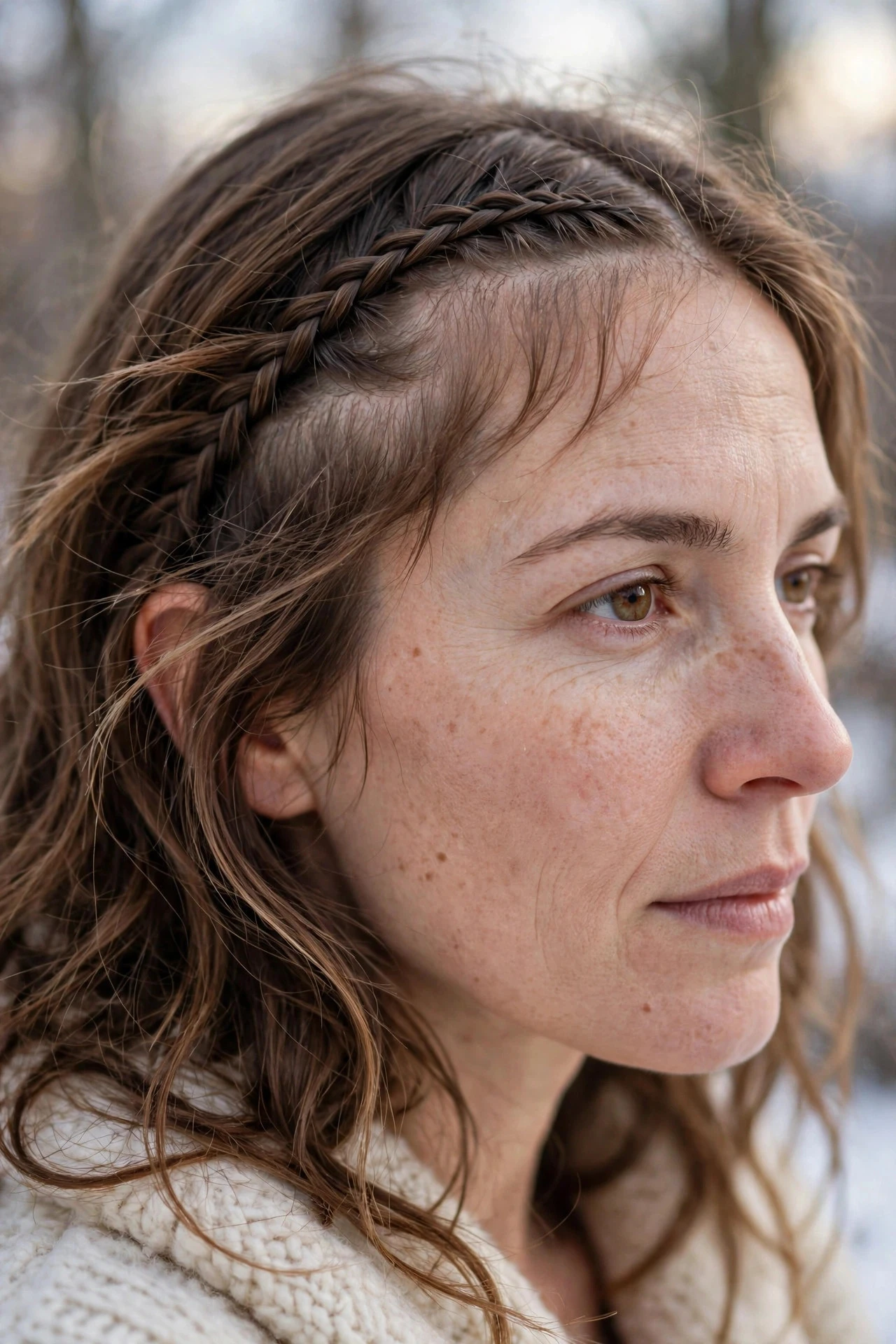
25. Winter Wedding Braid
A wedding in winter calls for a braid that looks like it belongs in photographs: a loose Dutch braid swept into a low chignon, with soft pieces pulled out at the temples and a few pearl pins tucked into the plait. It suits long hair best and is worth booking a stylist for — ask for a braid that starts loose at the crown and tightens as it goes, so it holds all day without pulling.
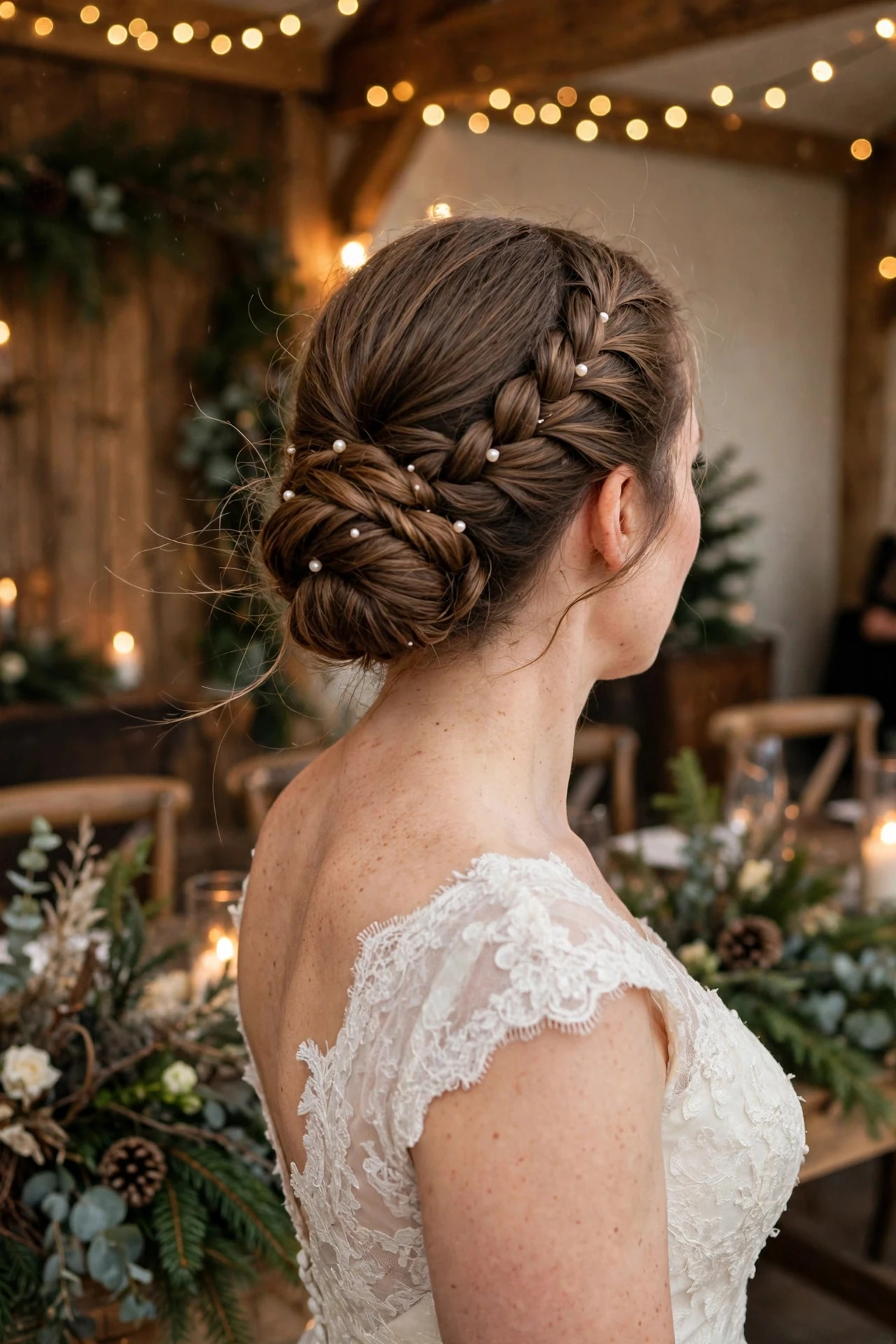
26. Braided Holiday Updo
For the holiday party itself: a braided updo built from two Dutch braids swept up and pinned into a textured bun, with a few curled pieces left out at the nape. It suits medium to long hair and is the updo for anyone who finds a sleek bun too severe — the braids give it texture and softness, and it holds from the first glass of champagne to the last dance.

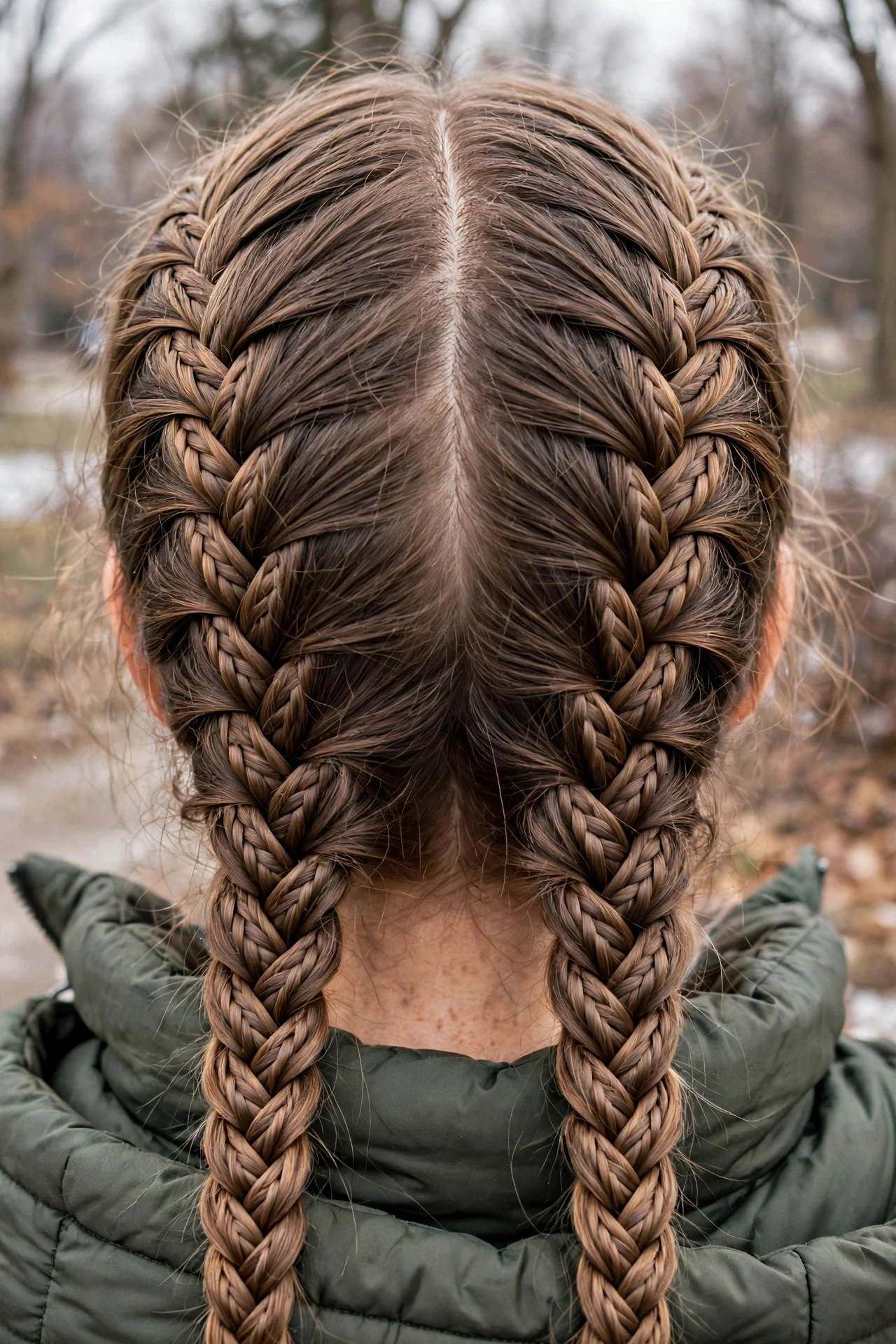
27. Double Fishtail Braids
Two fishtail braids, one on each side, parted down the middle — the fishtail version of boxer braids, and softer than the Dutch version. They suit long hair best and are my pick for a winter weekend when you want something a little different from your usual braids: the flat fishtail pattern lies beautifully under a coat collar, and the style lasts two days. Keep the pieces small for a neat, intricate look, or grab bigger chunks for a relaxed one.
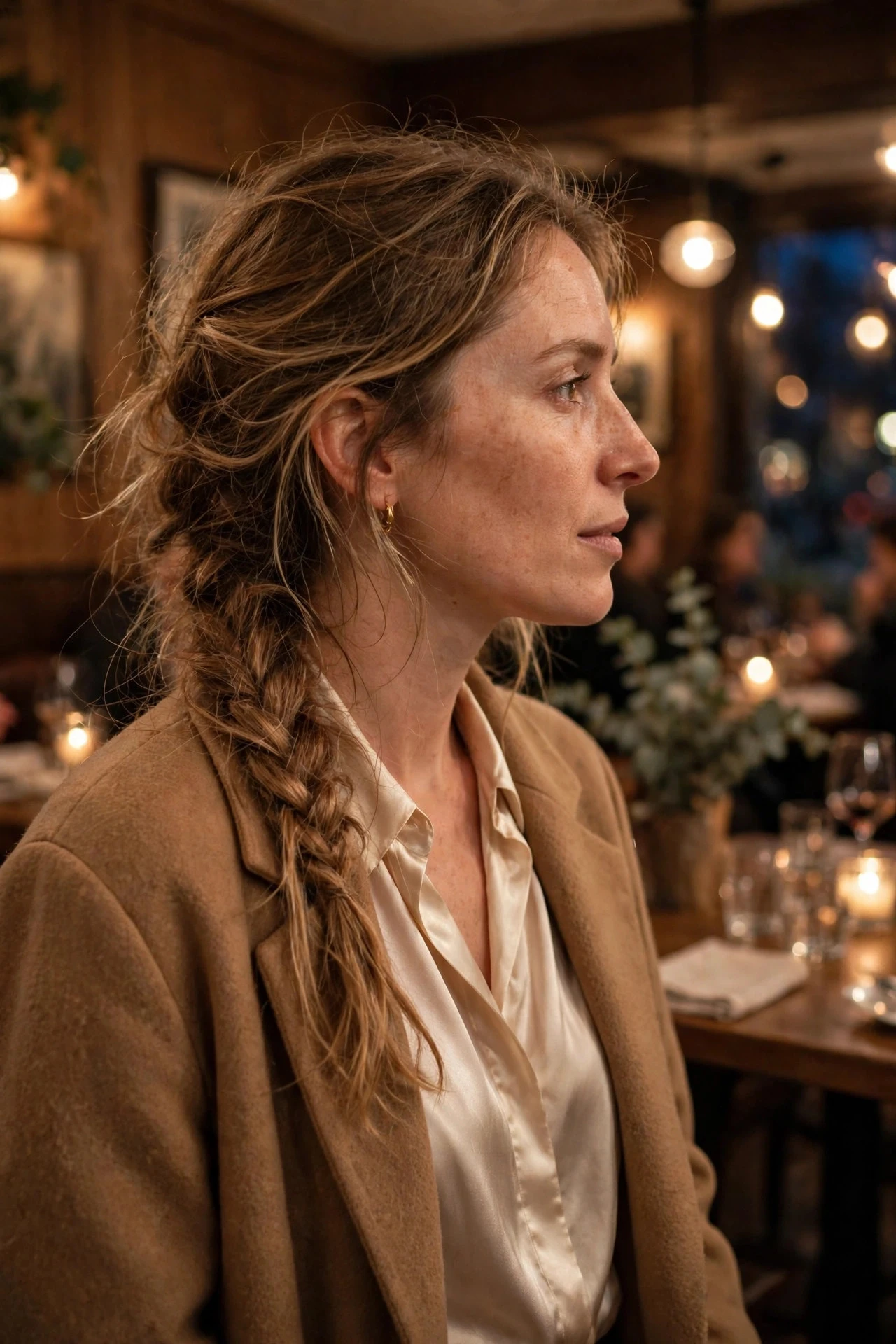
28. Messy Side Fishtail
The fishtail’s relaxed little sister: sweep all your hair to one side, fishtail it loosely, and pull it apart until it looks like it might fall out — but does not. It suits long, wavy hair best and is the braid for a winter evening out, worn with a silk blouse and a long coat. The messiness is deliberate, so do not be afraid to tug: pull the edges wide, let a few strands escape at the front, and tie it low with a velvet ribbon.
29. Braided Space Buns
Two braided buns, one on each side of the head — playful, warm and completely practical. Braid each half up into a bun and pin it, and you have a style that keeps every strand off your face and neck, which matters on the coldest days. It suits medium to long hair and is the braid for a winter festival, a ski trip or a fun night out, worn with a chunky knit and a beanie pulled low over the top.

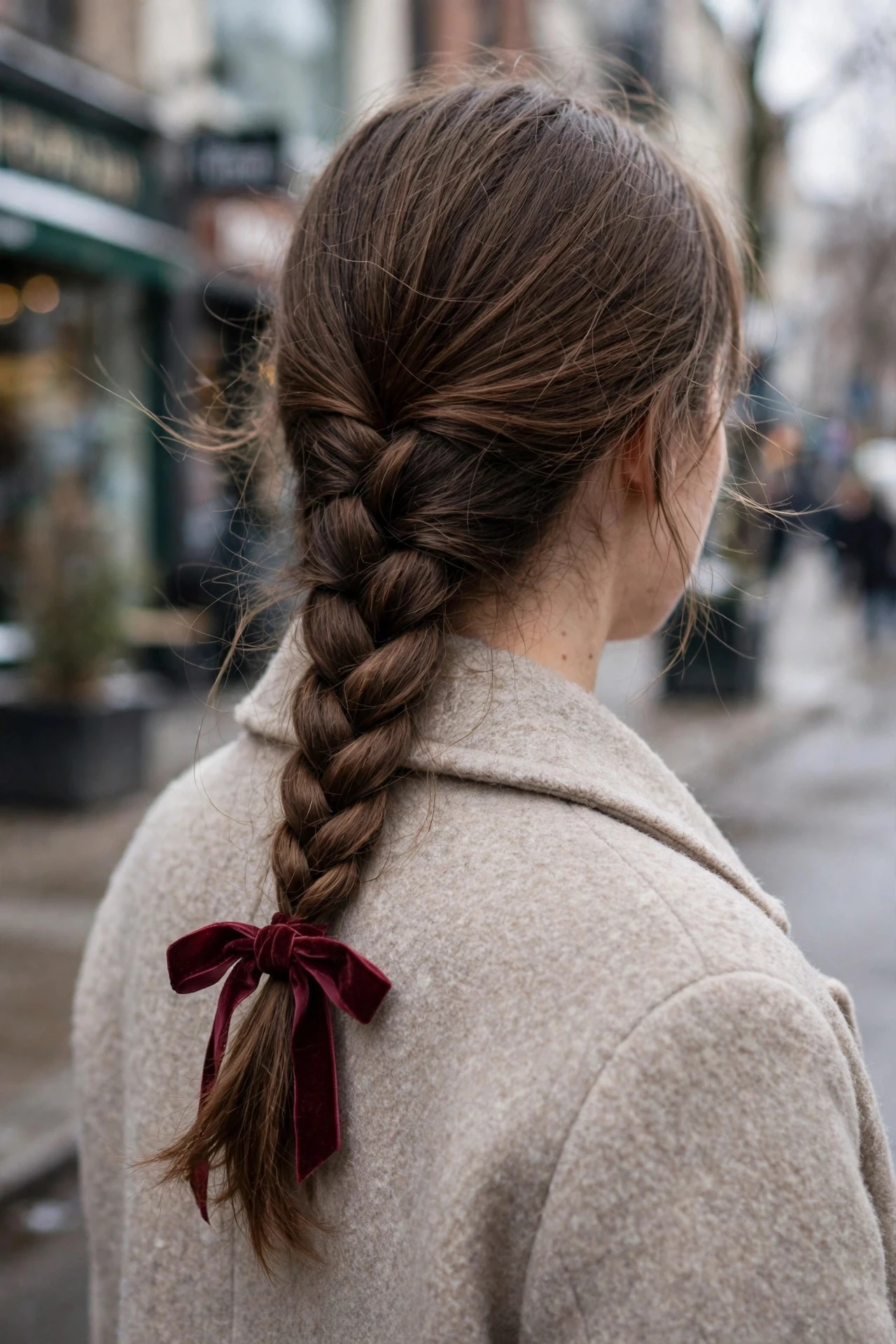
30. Classic Three-Strand Braid with a Velvet Ribbon
The simplest braid there is, finished with a velvet ribbon tied in a bow at the end — and somehow the one that gets the most compliments. It suits every length and every age, and it is the braid I reach for on the days I have no time and still want to look like I tried. Braid low and loose, tie with the ribbon instead of an elastic, and let the ribbon ends hang a little long.
31. Halo Braid with a Knit Headband
A halo braid — one continuous braid wrapped right around the head — worn with a soft knit headband over the top: the warmest, prettiest braid on this list. It suits medium to long hair and is made for the coldest days, because the headband adds a layer of warmth at the ears and the braid keeps everything else tucked away. Braid around the head starting at one ear, pin the tail under the start, and slide the headband on so it sits just behind the braid.

32. Braid-and-Waves Half-Up
Braid two small sections back from the temples, pin them together, and leave the rest of your hair in soft waves — the braid-and-waves half-up is the easiest party braid there is, and the one that suits the most people. It works on medium and long hair, straight or wavy, and it is the style for anyone who wants a braid in their photos without committing to a full braid. Curl the lengths loosely first, then braid the top pieces and pin them low at the back.

Frequently Asked Questions
Do braids actually protect hair in winter?
Yes — a braid is one of the best things you can do for winter hair, because it keeps the ends tucked away from cold wind, dry air and the constant rubbing of wool scarves and coat collars, which cause most winter breakage. The protection only works if the braid is not too tight: a braid pulled drum-tight stresses the roots and the hairline, so keep it firm but comfortable, and never sleep in a very tight braid.
How long can you keep braids in?
A simple everyday braid — French, Dutch or fishtail — can stay in for one to three days, and it usually looks better on day two, when the pieces have softened. Take it out, brush it through gently, and re-braid rather than leaving the same braid in for a week: old braids trap shed hair and product, and the ends start to frizz and tangle. Protective styles like goddess braids are different — those are designed to stay in for two to four weeks, but only with regular scalp care and a silk scarf or bonnet at night.
Which braids work on shorter hair?
Short hair braids beautifully — you just braid smaller sections. A braided bob uses tiny braids at the temples and along the parting, a half-up crown braid works from a lob upwards, and a braided fringe is the perfect fix for a growing-out fringe at any length. The key is grip: short pieces slip out of a loose braid, so use a little pomade or styling cream on your fingertips, keep the braid close to the head, and pin the ends with small bobby pins that match your hair colour.
How do I stop frizz and an itchy scalp under braids in winter?
Winter frizz comes from dry air, so the fix is moisture before the braid, not after it: work a pea-sized drop of leave-in conditioner or light hair oil through the lengths before you braid, and smooth flyaways with a tiny amount of pomade on your palms. For an itchy scalp, the cause is usually product build-up or a braid that is too tight at the roots — loosen the hairline, wash with a gentle clarifying shampoo before braiding, and dab a light scalp oil along the partings while the braid is in. Never scratch through a braid with a comb; use your fingertips.
Closing
Winter is the season braids were made for — they protect your hair from everything the cold throws at it, they hold their shape under hats and coats, and they look better on day two than they did on day one. Pick one braid and wear it for a week: a loose French braid for work, a Dutch crown for the weekend, a bubble braid for the day you have five minutes. If you love finishing a braid with a little sparkle, our Bedazzled Claw Clips pair beautifully with the braided top knot and the holiday updo above. A braid is the kindest thing you can give your hair — no heat, no fuss, just your own hair, doing what it does best.



One Comment